Introduction: Understanding Two Distinct Roofing Categories
For building professionals navigating the complex landscape of roofing materials, the choice between shingle roof tiles and Mediterranean roof tiles represents a decision that extends far beyond aesthetics. These two product categories embody fundamentally different design philosophies, performance characteristics, and market applications. Shingle roof tiles, designed to replicate the familiar appearance of traditional asphalt or wood shingles, offer a versatile solution suited to a broad range of architectural styles. Mediterranean roof tiles, with their distinctive curved profiles and warm earth tones, deliver a specific aesthetic associated with luxury residential, hospitality, and Mediterranean-inspired architecture.
Understanding the practical differences between these categories is essential for making informed specifications that align with project requirements, budget parameters, and client expectations. At ROOFGLORY, we manufacture both shingle and Mediterranean profile systems at our facility in Linyi, Shandong, China, giving us a comprehensive perspective on how these products perform across different applications. This guide provides a practical, business-oriented comparison designed to help building professionals select the optimal roofing solution for their specific projects.
Defining the Product Categories
Shingle Roof Tiles
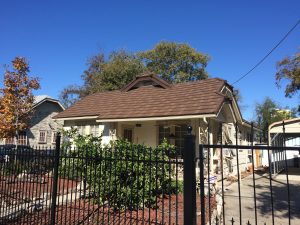
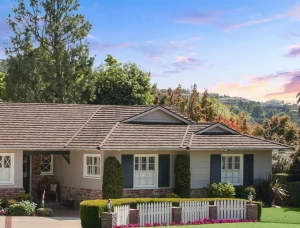
Shingle roof tiles are designed to replicate the appearance of traditional roofing materials—asphalt shingles, wood shakes, or slate—while utilizing the performance advantages of stone-coated steel construction. The profile is characterized by:
-
Flat or gently contoured surfaces that create a uniform, repeating pattern
-
Rectangular shapes with staggered installation that mimics traditional shingle layouts
-
Shadow lines created by layered installation rather than three-dimensional profiling
-
Aesthetic versatility that complements Colonial, Craftsman, Contemporary, and traditional residential architecture
Shingle profiles are the most widely applicable roofing style, suitable for the broadest range of architectural contexts. Their familiar appearance makes them a safe choice for projects where traditional aesthetics are desired without architectural statement.
Mediterranean Roof Tiles
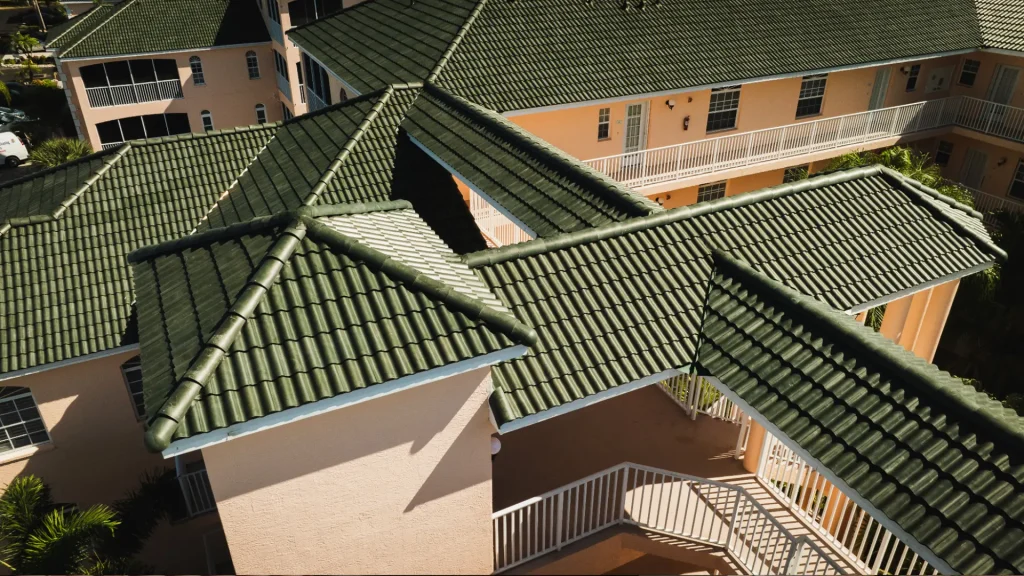
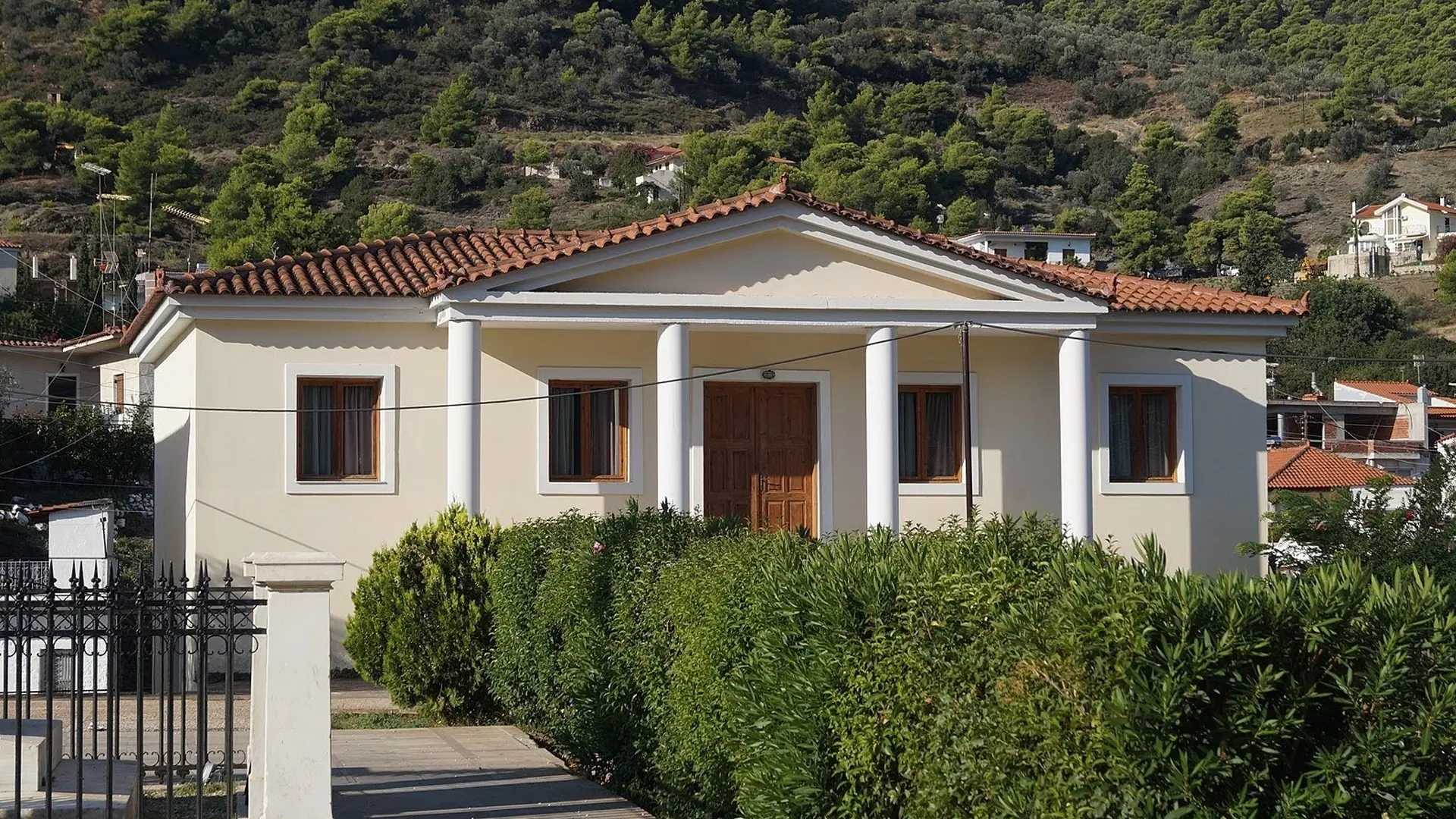
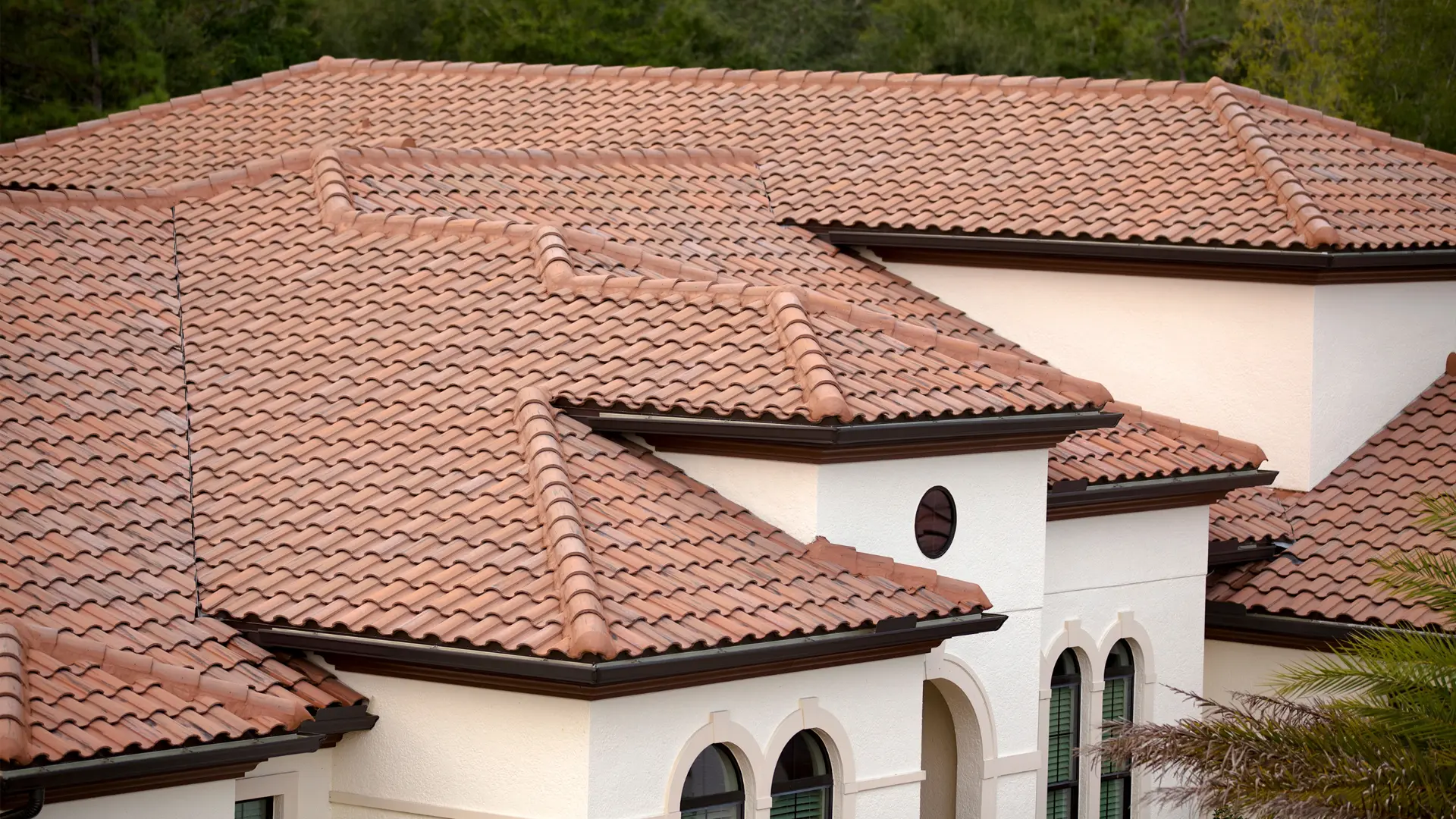
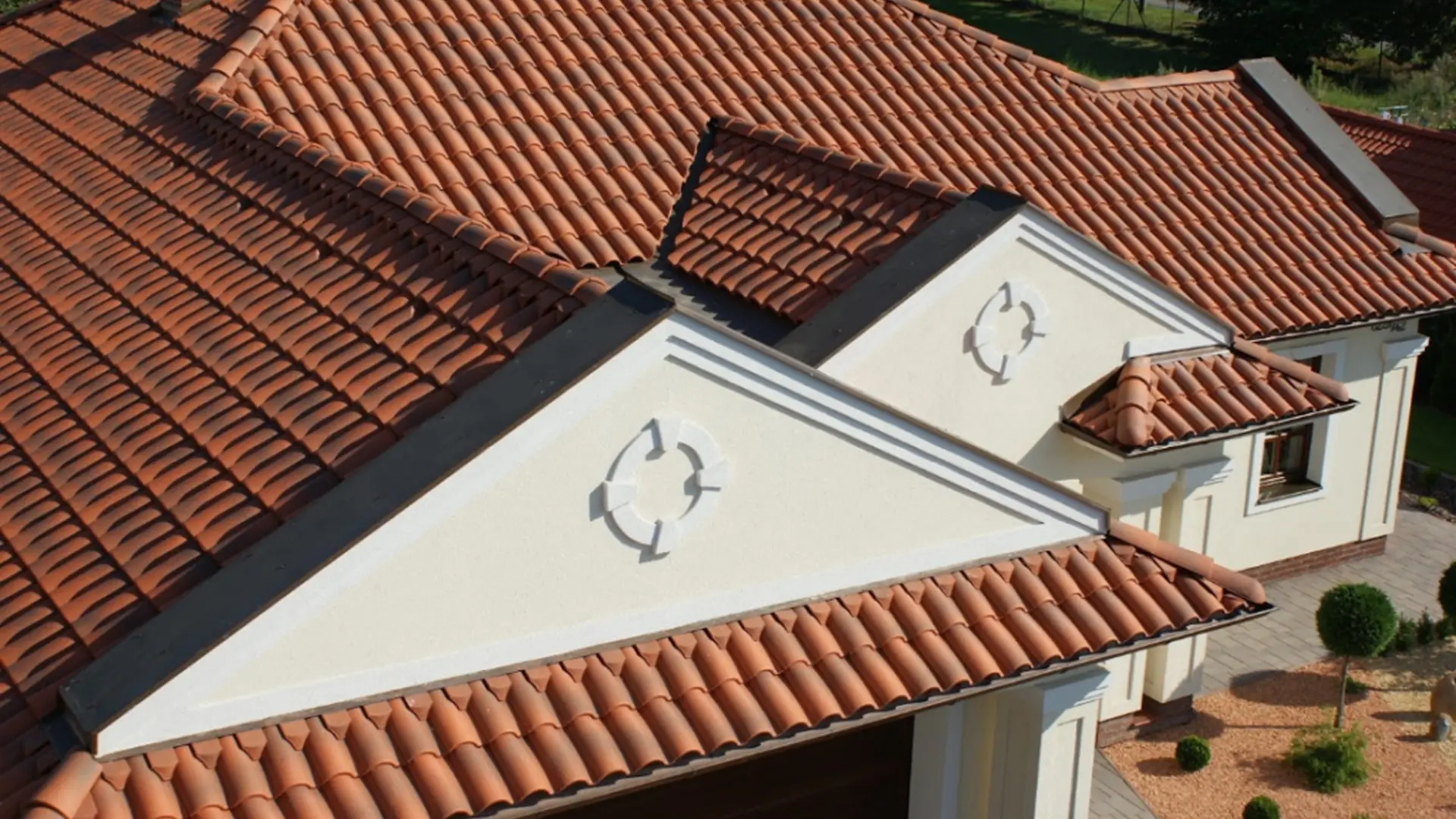
Mediterranean roof tiles feature the distinctive curved “S” or barrel profile associated with Italian, Spanish, and Mediterranean architecture. Key characteristics include:
-
Pronounced curves creating deep shadow lines and dimensional texture
-
Warm terracotta color palettes ranging from reds and oranges to ochres and tans
-
Distinctive visual rhythm that defines the architectural character of the building
-
Strong association with luxury, resort, and Mediterranean-inspired design
Mediterranean profiles make a deliberate architectural statement. They are chosen when the roof is intended to be a defining visual element of the structure rather than a neutral background feature.
Comparative Analysis: Performance and Practicality
Weight and Structural Requirements
Both shingle and Mediterranean profiles from ROOFGLORY utilize stone-coated steel construction, resulting in significant weight advantages over traditional materials. However, the specific weight characteristics differ based on profile geometry and steel gauge.
Shingle profiles, with their flatter configuration, typically weigh between 2.5 and 3.5 kilograms per square meter. This lightweight characteristic simplifies handling, reduces structural requirements, and allows for installation over existing roofs in many retrofit applications.
Mediterranean profiles, due to their deeper contours and dimensional complexity, generally weigh between 3.5 and 4.5 kilograms per square meter. While still dramatically lighter than traditional clay Mediterranean tiles—which can weigh 40 to 60 kilograms per square meter—this profile requires appropriate structural consideration.
For building professionals, the practical implication is that both profiles offer substantial weight savings compared to traditional alternatives, but Mediterranean profiles demand slightly more robust structural support than shingle profiles of comparable coverage area.
Installation Complexity and Labor Requirements
The installation characteristics of these two profiles differ significantly, affecting project timelines and labor costs.
Shingle profiles are designed for straightforward, efficient installation. The flat configuration allows for predictable cutting, fitting, and fastening. Installers familiar with traditional shingle applications adapt quickly to metal shingle systems. The result is typically faster installation rates and lower labor costs per square meter.
Mediterranean profiles require more specialized installation techniques. The curved configuration demands attention to proper interlock engagement, and the three-dimensional nature of the profile creates additional complexity at valleys, hips, and penetrations. Experienced installers familiar with barrel tile systems are essential for optimal results. Installation typically proceeds more slowly than with shingle profiles, reflecting the additional care required.
The practical trade-off is clear: shingle profiles offer installation efficiency and broader installer availability; Mediterranean profiles deliver distinctive aesthetics at a cost of somewhat higher labor investment.
Weather Performance and Water Management
Both profiles, when properly installed, deliver exceptional weather protection characteristic of stone-coated steel systems. However, their water management approaches differ.
Shingle profiles rely on overlapping installation and the continuous water-shedding surface created by the stone-coated steel substrate. The flat configuration provides consistent, predictable water flow across the roof plane.
Mediterranean profiles utilize the inherent water-channeling properties of the curved shape. The barrel configuration naturally directs water into the channels formed by adjacent tiles, creating efficient drainage pathways. This design has proven effective for centuries in the Mediterranean climate, where heavy rainfall can be followed by intense sun.
For building professionals, the practical consideration is that both profiles offer robust weather protection when installed according to manufacturer specifications. Mediterranean profiles may offer slight advantages in regions with extreme rainfall due to their channeling design, while shingle profiles provide more predictable installation outcomes across varied roof geometries.
Aesthetic Applications and Market Positioning
Architectural Compatibility
Shingle profiles are appropriate for the widest range of architectural styles. They complement:
-
Traditional Colonial and Georgian residences
-
Craftsman and bungalow designs
-
Contemporary and modern architecture
-
Suburban residential developments
-
Commercial buildings requiring neutral aesthetic appeal
Mediterranean profiles are selected when the building’s architectural identity is intentionally Mediterranean or Spanish-influenced. They are ideal for:
-
Luxury residential villas and estates
-
Resort and hospitality properties
-
Mediterranean-inspired commercial developments
-
Historical restoration projects
-
Properties in coastal or warm climate regions where the aesthetic aligns with regional character
Market Perception and Client Expectations
Understanding how clients perceive these roofing types is essential for effective project positioning.
Shingle profiles are viewed as familiar, safe, and versatile. They do not make a strong architectural statement but are widely accepted across market segments. For developers seeking broad market appeal, shingle profiles represent a low-risk aesthetic choice.
Mediterranean profiles are perceived as premium, distinctive, and luxurious. They signal investment in architectural quality and are associated with higher-end properties. For projects targeting luxury markets or seeking architectural differentiation, Mediterranean profiles can justify premium pricing and enhance property value perception.
Material Specifications and Longevity
Steel Substrate and Coating Systems
Both product categories from ROOFGLORY utilize identical substrate materials and coating technologies. The foundation is high-strength steel treated with aluminum-zinc alloy coatings that provide exceptional corrosion resistance. The stone coating—natural mineral granules embedded in advanced acrylic binders—provides UV protection, impact resistance, and aesthetic permanence.
This material consistency means that both shingle and Mediterranean profiles offer comparable durability and service life. Properly installed, both deliver 50 years or more of reliable performance with minimal maintenance.
Profile-Specific Considerations
While the base materials are identical, profile geometry influences certain performance aspects:
Impact Resistance: The curved configuration of Mediterranean profiles may provide slight advantages in impact resistance, as the curved surface distributes impact forces differently than flat surfaces. However, both profiles exceed standard impact resistance requirements for most applications.
Thermal Performance: Profile geometry affects air flow beneath the tiles. Mediterranean profiles, with their deeper contours, may create slightly enhanced ventilation channels that contribute to thermal performance. The practical difference is modest but worth noting for projects with stringent energy performance requirements.
Repairability: Shingle profiles offer simpler repair characteristics. Individual tiles can be removed and replaced with relative ease. Mediterranean profiles, due to their interlocking curved configuration, require more careful attention during repair operations.
Cost Considerations and Return on Investment
Initial Material Costs
Material costs for both profiles reflect the complexity of manufacturing and the volume of material required per square meter of coverage.
Shingle profiles, with their flatter configuration and simpler forming requirements, typically offer more economical material costs. The manufacturing process is straightforward, and coverage per tile is efficient.
Mediterranean profiles require more complex forming operations and greater material depth to achieve the characteristic curved profile. These manufacturing factors contribute to higher material costs per square meter compared to shingle profiles of equivalent quality.
Installation Cost Implications
Labor costs further differentiate these categories. Shingle profiles install more quickly, requiring less specialized skill, which translates to lower labor costs per square meter. Mediterranean profiles require more time and specialized expertise, increasing the labor component of total installed cost.
Lifecycle Value Analysis
Both product categories offer excellent long-term value through extended service life and minimal maintenance requirements. The total cost of ownership over 50 years compares favorably to traditional roofing materials that require replacement every 15-25 years.
The economic decision between profiles typically centers on whether the aesthetic and market positioning benefits of Mediterranean profiles justify their higher initial investment. For luxury developments and hospitality projects where the roof is a defining architectural feature, the premium is often readily justified. For more price-sensitive projects or those where the roof is not a primary design element, shingle profiles may offer more appropriate economics.
Practical Applications by Project Type
Residential Development
For residential developers, the choice between profiles often aligns with project positioning:
-
Entry-level and mid-market subdivisions benefit from shingle profiles’ broad appeal and cost efficiency
-
Luxury custom homes and high-end developments may justify Mediterranean profiles for their distinctive appearance and premium market positioning
-
Mixed-use developments may incorporate both profiles, using Mediterranean on premium units and shingle on supporting structures
Hospitality and Commercial
Hospitality projects—hotels, resorts, restaurants—frequently select Mediterranean profiles to establish a distinctive identity and convey luxury. The roof becomes a marketing asset that contributes to brand positioning and guest experience.
Commercial projects with neutral architectural requirements typically select shingle profiles for their cost efficiency and professional appearance.
Institutional and Public Buildings
Institutional projects—schools, government buildings, religious structures—may select either profile based on architectural context. Shingle profiles offer conservative, professional appearance suitable for many public buildings. Mediterranean profiles may be specified for projects where architectural character is intentionally distinctive.
Installation and Technical Support Considerations
Installer Availability and Training
Shingle profiles benefit from broad installer familiarity. Roofing contractors comfortable with asphalt shingles adapt readily to metal shingle systems, reducing the need for specialized training.
Mediterranean profiles require installers familiar with barrel tile installation techniques. While the transition from clay to metal Mediterranean tiles is straightforward for experienced tile installers, this specialization may limit installer availability in some regions.
Technical Documentation and Support
ROOFGLORY provides comprehensive technical documentation for both profile categories, including detailed installation manuals, specification guides, and detail drawings for common roof conditions. Our technical support team is available to assist with project-specific questions, ensuring successful outcomes regardless of profile selection.
Conclusion: Matching Product to Purpose
The choice between shingle roof tiles and Mediterranean roof tiles is fundamentally about aligning product characteristics with project requirements. Shingle profiles offer broad applicability, installation efficiency, and cost effectiveness that make them suitable for the widest range of projects. Mediterranean profiles deliver distinctive architectural character and premium market positioning that can elevate luxury developments and hospitality projects.
Both product categories, manufactured to ROOFGLORY standards, deliver the durability, weather resistance, and long-term performance that define quality stone-coated steel roofing. The decision between them should be guided by project-specific considerations: architectural style, market positioning, budget parameters, and client expectations.
For building professionals seeking to optimize project outcomes, understanding these practical distinctions enables informed specifications that balance aesthetic aspirations with construction realities. Whether selecting shingle profiles for their versatility or Mediterranean profiles for their distinctive character, the investment in quality stone-coated steel roofing delivers returns through decades of reliable performance.
To explore detailed specifications, request samples, or discuss your specific project requirements, we invite you to contact the ROOFGLORY technical team.
Explore ROOFGLORY roofing solutions:
-
Shingle Roof Tile Collection: View our comprehensive range of shingle profiles and color options
-
Mediterranean Roof Tile Collection: Explore our authentic Mediterranean profiles
-
Technical Specifications: Access detailed product data and installation guides
-
Project Consultation: Discuss your specific requirements with our technical team
-
Product Samples: Request physical samples for evaluation