
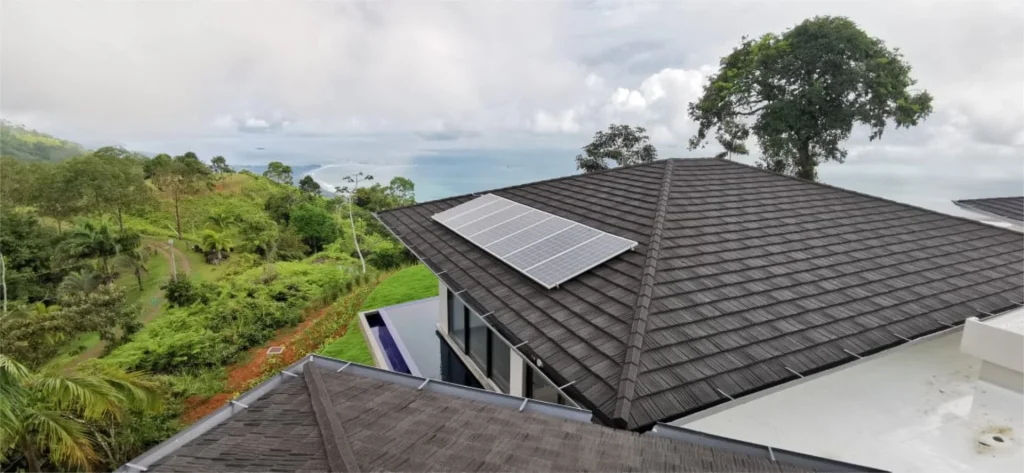
In roofing procurement, there is a common misunderstanding:
Most people assume that roofing failure is caused by “bad materials”.
But in real-world construction projects—from residential villas to large commercial buildings—this assumption is often wrong.
In fact, when stone coated roofs fail, the root cause is usually not the roofing material itself, but a combination of system-level errors, including installation mistakes, structural mismatches, poor accessory selection, and incorrect project planning.
This is why two projects using identical stone coated roofing materials can have completely different outcomes:
- One roof performs reliably for 40–60 years
- Another starts leaking or degrading within 3–5 years
At ROOFGLORY, a stone coated steel roofing manufacturer based in Linyi, Shandong, China, we have supplied roofing systems to international contractors and distributors across climates ranging from tropical coastal regions to high-wind desert environments. Across these projects, failure patterns are surprisingly consistent—and predictable.
This article is not about selling roofing materials.
It is about understanding why roofing systems fail in real engineering environments, and how professional buyers avoid expensive mistakes.
1. The Core Misconception: “Material Quality Determines Roof Success”
One of the most expensive assumptions in construction procurement is:
“If I buy high-quality roofing material, the roof will automatically perform well.”
In reality, stone coated roofing is not a standalone product. It is part of a multi-layer building system, which includes:
- Roof structural deck
- Underlayment system
- Fastening system
- Ventilation design
- Edge and flashing integration
- Installation workmanship
Even the best material cannot compensate for a weak system design.
This is why roofing failures are often systemic rather than material-based.
2. Failure Type One: Incorrect Roof Installation Practices
The most common cause of stone coated roof failure is not weather—it is installation execution.
Even experienced contractors can make critical mistakes, especially when transitioning from asphalt shingles or traditional tile systems.
2.1 Improper fastening density
Stone coated roofing relies heavily on mechanical fastening.
If fasteners are:
- Too sparse → wind uplift failure
- Too tight → coating damage
- Incorrect material → corrosion at fixing points
Even a small deviation in fastening pattern can reduce wind resistance performance significantly.
2.2 Misaligned interlocking system
Stone coated roofing tiles are designed to lock mechanically.
If interlocks are not fully engaged:
- Water penetration risk increases
- Wind uplift resistance decreases
- Structural load distribution becomes uneven
This is one of the most overlooked installation errors in international projects.
2.3 Ignoring roof ventilation design
Many failures labeled as “roof leakage” are actually caused by condensation buildup, not external water ingress.
Without proper ventilation:
- Moisture accumulates under tiles
- Underlayment degrades prematurely
- Internal corrosion risk increases
3. Failure Type Two: Underlayment System Breakdown
In high-quality roofing systems, the underlayment is not optional—it is a critical waterproofing layer.
However, in many cost-driven projects, underlayment is:
- downgraded
- improperly installed
- or partially omitted
This leads to:
- Water infiltration during extreme rainfall
- Thermal expansion damage
- Localized roof deck deterioration
In practice, many “roof leaks” originate from underlayment failure, not tile failure.

4. Failure Type Three: Structural Mismatch Between Roof and Building
A surprisingly common issue occurs when roofing systems are selected without considering structural compatibility.
Examples include:
- Installing roofing designed for high wind zones on low-spec structures
- Using incorrect batten spacing
- Ignoring load distribution requirements
- Retrofitting stone coated roofing onto weak existing structures
In these cases, failure does not come from the roof itself, but from system incompatibility.
5. Failure Type Four: Extreme Climate Misapplication
Stone coated roofing performs well in most environments—but only when correctly specified.
Problems arise when material selection does not match climate conditions.
Hot climates
Failure causes:
- Poor heat expansion allowance
- Low UV resistance coating selection
Coastal environments
Failure causes:
- Inadequate corrosion-resistant steel
- Fastener corrosion from salt exposure
Cold climates
Failure causes:
- Freeze-thaw stress on flashing
- Ice dam formation due to poor drainage design
6. Failure Type Five: Cost-Driven Supplier Selection
One of the most critical failure points in global procurement is choosing roofing suppliers based solely on price.
Lower-cost suppliers often reduce cost in areas such as:
- Steel thickness
- Zinc-aluminum coating quality
- Stone granule adhesion strength
- Quality control processes
These reductions are not immediately visible—but they directly impact long-term durability.
This is why two visually identical roofs can perform very differently over time.
7. Failure Type Six: Improper Accessory Integration
Roofing systems are only as strong as their weakest component.
Common accessory-related failures include:
- Incompatible ridge caps
- Poor valley flashing design
- Low-quality screws and fasteners
- Missing edge protection components
In many cases, accessories are sourced separately from the main roofing system, creating compatibility issues.
8. Why Stone Coated Roofs Are Still Considered a High-Performance System
Despite the failure scenarios above, stone coated roofing remains one of the most reliable roofing systems when properly designed and installed.
Its advantages include:
- Multi-layer corrosion protection
- High wind resistance capability
- Long service life (40–70 years)
- Low maintenance requirements
- Strong aesthetic adaptability
Most importantly, it is a system-engineered roofing solution, not just a surface material.
9. How Professionals Prevent Roofing Failure
Experienced contractors and developers do not “buy roofing”.
They design a roofing system.
They typically control failure risk by:
- Standardizing installation procedures
- Using certified accessory systems
- Matching roofing profiles to climate conditions
- Conducting structural load assessments
- Working with manufacturers for technical validation
This is where manufacturer support becomes critical.
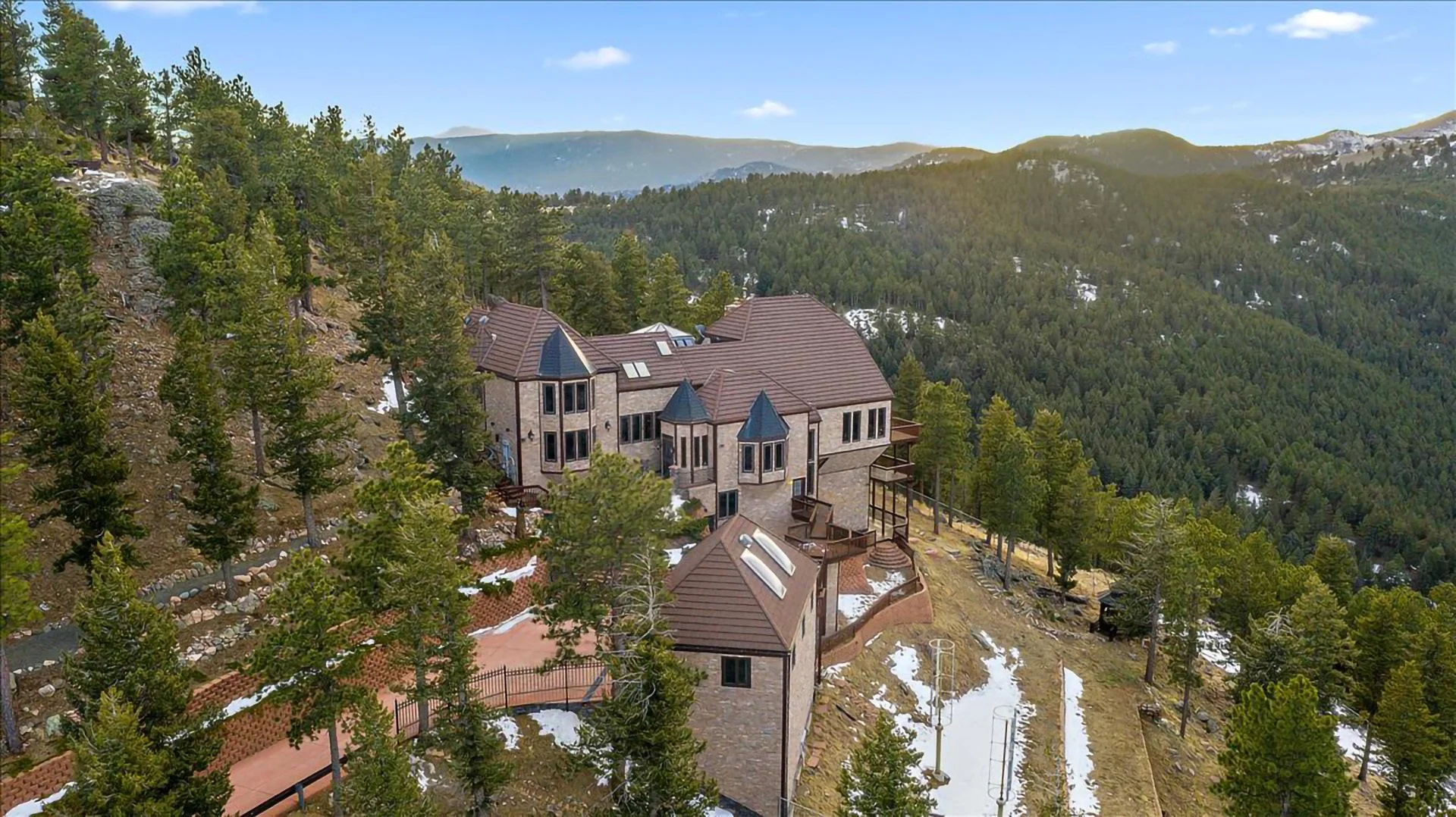
10. The Role of Manufacturer Engineering Support
At ROOFGLORY (Linyi, Shandong, China), we work directly with international B2B clients not only as a supplier, but as a technical support partner.
This includes:
- Roofing system specification guidance
- Climate-based material recommendations
- Installation structure planning
- Accessory system matching
- Container loading optimization for export
In complex commercial projects, this engineering support often determines project success more than the material itself.
Conclusion: Why Roofing Failures Are Predictable—and Preventable
Stone coated roof failures are rarely random.
They are usually the result of predictable system-level issues:
- Installation errors
- Structural mismatches
- Climate misapplication
- Poor accessory selection
- Cost-driven procurement decisions
This is important because it changes the way roofing should be evaluated.
Instead of asking:
“Which roofing material is best?”
Professional buyers ask:
“Which roofing system is correctly designed for my project conditions?”
At ROOFGLORY, we focus on helping global partners avoid these failures through engineered stone coated roofing systems manufactured in Linyi, Shandong, China.
To explore system specifications or request project consultation, visit: