Introduction: Building Responsibly with Intelligent Design
The construction industry stands at a critical juncture where environmental responsibility is no longer optional but essential. Building professionals—architects, developers, contractors, and specifiers—are increasingly evaluated not only on the aesthetic and functional outcomes of their projects but on their environmental impact. Among the many decisions that shape a building’s ecological footprint, the roofing system represents one of the most consequential. It is the largest exposed surface of most buildings, directly influencing energy consumption, material resource utilization, and long-term waste generation.
Interlocking roof tiles, particularly those manufactured with stone-coated steel technology, have emerged as a leading solution for sustainable roofing. Unlike conventional materials that compromise environmental performance for cost or aesthetics, interlocking systems deliver across all dimensions of sustainability: responsible material sourcing, operational energy efficiency, exceptional durability that minimizes replacement waste, and complete end-of-life recyclability. At ROOFGLORY, our interlocking roof tiles are manufactured at our facility in Linyi, Shandong, China, with these environmental principles integrated into every stage of production and product design. This guide explores why interlocking roof tiles represent the best option for building professionals committed to sustainable construction.
The Material Advantage: Steel as a Sustainable Foundation
Recycled Content and Circular Economy
The steel substrate at the core of quality interlocking roof tiles embodies the principles of circular economy. Steel is the most recycled material on the planet, with established recovery and reprocessing infrastructure that ensures end-of-life products return to the material stream rather than accumulating in landfills.
Modern steel production increasingly relies on electric arc furnace technology, which can utilize up to 90 to 100 percent recycled scrap steel as feedstock. This production method generates substantially lower carbon emissions compared to traditional blast furnace steelmaking, particularly when powered by renewable energy sources. For building professionals, specifying steel-based roofing means selecting a material that has already completed multiple lifecycles and is destined for many more.
The recycled content of stone coated steel roof tiles varies by manufacturer and specific product, but quality systems typically incorporate significant percentages of post-consumer and post-industrial recycled steel. This recycled content reduces demand for virgin ore extraction, lowers energy consumption in manufacturing, and decreases the overall embodied carbon of the roofing system.
Natural Stone Coating: Inert and Durable
The stone granules that give these roof tiles their distinctive appearance and protective qualities are natural mineral materials that require minimal processing. Unlike synthetic roofing materials that rely on petroleum-based feedstocks or chemical preservatives, stone is inherently stable, non-toxic, and resistant to biological degradation.
The stone coating eliminates the need for biocides, fungicides, or other chemical treatments that might be required with organic roofing materials. This means that rainfall runoff from stone coated steel roofs carries fewer chemical contaminants compared to treated wood shakes or some synthetic alternatives. For projects in environmentally sensitive areas or pursuing water quality certifications, this characteristic holds practical significance.
Eco-Friendly Coating Systems
The protective coatings that encapsulate the stone granules and bond them to the steel substrate have evolved significantly in response to environmental regulations and market demands. Modern coating systems utilize water-based formulations that reduce volatile organic compound emissions during application and throughout the product’s service life.
These advanced coatings are engineered for exceptional durability, meaning they maintain their protective properties for decades without requiring recoating or chemical treatment. This longevity reduces the environmental impact associated with maintenance activities and extends the effective service life of the entire roofing system.
Energy Efficiency: Reducing Operational Carbon
Cool Roof Technology
The single most significant contribution of roofing to building energy performance involves its interaction with solar radiation. Dark-colored roofs absorb a substantial percentage of incoming sunlight, converting it to heat that transfers to the building interior. This absorption increases cooling loads, particularly in warm climates, driving up energy consumption and associated carbon emissions.
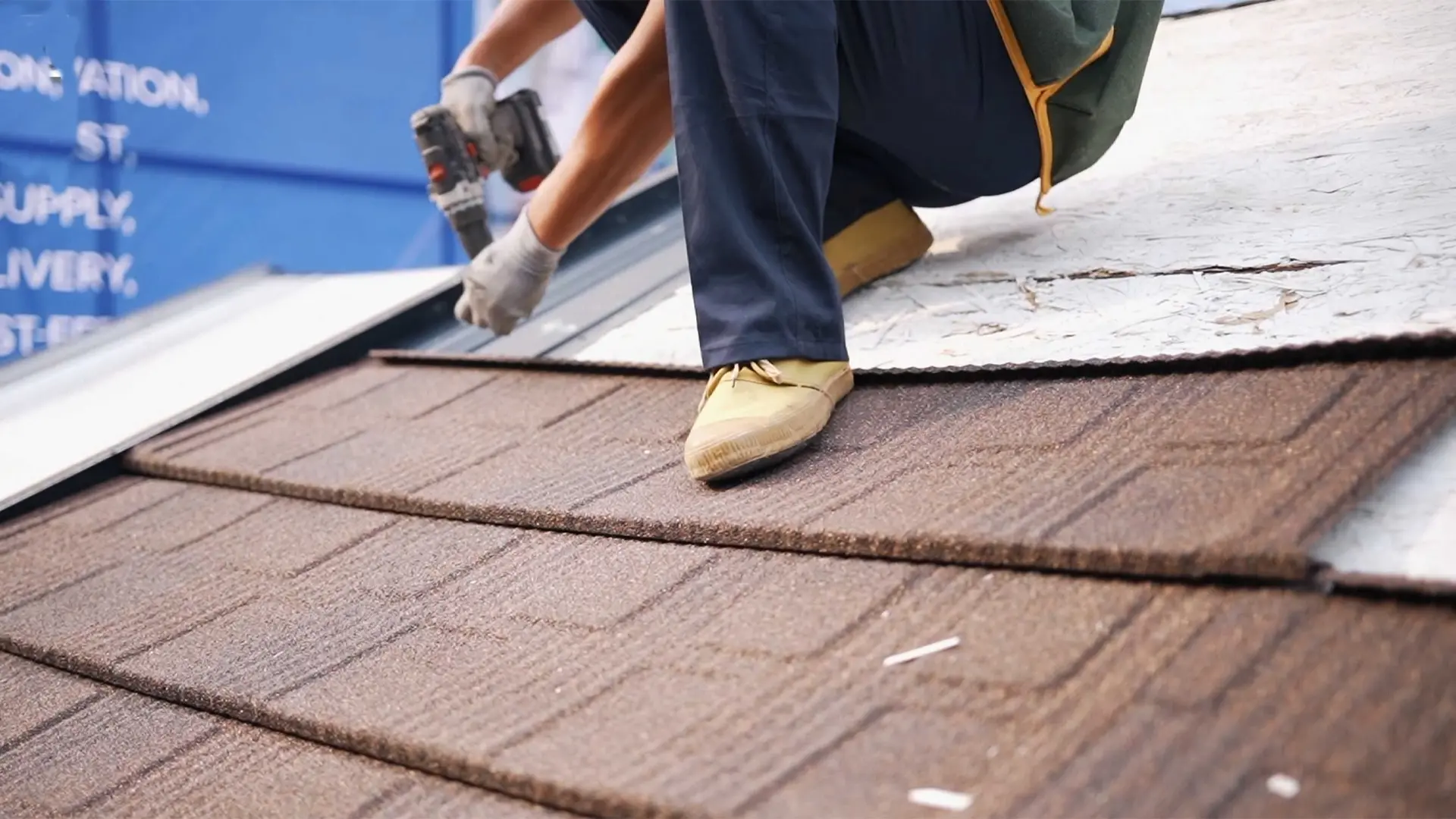
Stone coated interlocking roof tiles can be engineered for high solar reflectance through careful selection of stone granule colors and the incorporation of reflective pigments in the coating system. Lighter color options, in particular, achieve reflectance values that dramatically reduce rooftop surface temperatures—often by 20 to 30 degrees Celsius compared to conventional dark roofs.
This “cool roof” capability translates directly to reduced building energy consumption. For commercial buildings with significant cooling demands, the energy savings can reach 10 to 25 percent annually. Over the 50-year service life of a quality stone coated steel roof, these operational savings aggregate to substantial reductions in carbon emissions and utility expenses.
Thermal Mass and Passive Performance
Beyond reflectivity, the stone coating provides thermal mass that moderates temperature fluctuations. The dense mineral layer absorbs heat during peak solar hours, releasing it gradually as temperatures cool. This passive thermal regulation contributes to more stable interior conditions and reduces the cycling demands on HVAC systems.
The interlocking design also creates an air space between the tile and the roof deck when properly installed. This ventilation gap allows air circulation that removes heat buildup, further improving thermal performance. For building professionals seeking to optimize energy performance without adding active systems, this passive approach is both effective and economical.
Reduced Urban Heat Island Effect
At the community and city scale, widespread adoption of cool roofing can mitigate the urban heat island effect—the phenomenon where developed areas experience significantly higher temperatures than surrounding rural regions due to dark surfaces absorbing and retaining solar energy. Cool roofs reduce ambient temperatures, lowering energy demand across entire neighborhoods and improving air quality.
For developers and architects working on large-scale residential or mixed-use projects, specifying cool roofing contributes to broader environmental performance goals and may support certification under green building rating systems.
Durability and Waste Reduction: The Most Sustainable Roof Is One You Never Replace
Extended Service Life as Environmental Strategy
In environmental accounting, the most sustainable product is often the one that requires the fewest replacements over the building’s lifespan. This principle makes the exceptional durability of interlocking roof tiles a profound environmental benefit. Designed for service lives of 50 years or more, these systems eliminate the recurring replacement cycles that characterize conventional roofing materials.
Consider the resource mathematics: A building with a 50-year design life that uses asphalt shingles requiring replacement every 15 to 20 years will consume two to three complete roofing systems over that period. Each replacement consumes raw materials, manufacturing energy, transportation fuel, and labor. Each removal generates waste destined for landfill. The cumulative environmental impact of multiple roofing cycles dramatically exceeds that of a single, long-life installation.
By eliminating the need for replacement, interlocking roof tiles prevent this recurring environmental debt. The resources invested in a single installation deliver protection for the entire building lifecycle, maximizing the return on that environmental investment.
Construction and Demolition Waste Reduction
Construction and demolition waste represents a significant portion of landfill content globally, with roofing materials contributing substantially to this waste stream. Asphalt shingles, in particular, are notoriously difficult to recycle and are typically landfilled after removal.
The durability of interlocking roof tiles means they are rarely removed except during complete building demolition. When removal does occur, the steel substrate enters the recycling stream rather than the landfill. The stone granules, as inert mineral material, can be repurposed as aggregate or fill. This complete material utilization ensures that nothing from the roofing system need be wasted.
Packaging and Transportation Efficiency
The lightweight nature of interlocking roof tiles contributes to environmental efficiency before installation even begins. Compared to heavy traditional materials like clay or concrete tiles, stone coated steel systems weigh approximately one-tenth as much per square meter of coverage. This weight reduction translates to lower fuel consumption during transportation from manufacturing facility to job site.
Efficient packaging design further optimizes shipping density, allowing more material to be transported per container or truckload. These logistical efficiencies reduce the carbon footprint associated with material delivery and contribute to the overall environmental profile of the roofing system.
End-of-Life: Complete Recyclability
Steel Recovery Infrastructure
The steel industry has established comprehensive recovery infrastructure that captures end-of-life steel for reprocessing into new products. When a stone coated steel roof eventually reaches the end of its service life, the steel substrate is recovered through standard scrap metal recycling channels. Magnetically separated from other materials, it is melted down to become feedstock for new steel production.
This closed-loop recycling means that the steel in a ROOFGLORY roof can be recycled indefinitely without loss of material properties. Each recycling cycle preserves the energy and resources invested in the original production, creating a true circular material economy.
Stone Granule Repurposing
The stone granules, having performed their protective function for decades, remain inert mineral material suitable for various secondary applications. They can be used as aggregate in construction materials, as drainage fill in landscaping applications, or in other industrial processes requiring stable, non-reactive mineral content.
This complete material utilization ensures that nothing from the original roofing system need be wasted, embodying the principles of zero-waste design that define advanced sustainability practice.
Green Building Certification Support
LEED and BREEAM Alignment
For projects pursuing formal recognition of environmental performance, interlocking stone coated steel roof tiles contribute to multiple credit categories under leading green building rating systems:
Energy and Atmosphere: Cool roof performance supports Optimize Energy Performance credits by reducing cooling loads and associated energy consumption.
Materials and Resources: Recycled content contributes to Building Product Disclosure and Optimization credits. The durability that eliminates replacement cycles aligns with building lifecycle impact reduction principles.
Sustainable Sites: Cool roof performance supports Heat Island Reduction credits by minimizing contribution to elevated ambient temperatures.
Indoor Environmental Quality: The non-porous, inert surface resists mold and biological growth, contributing to healthy indoor environments.
Similar contributions apply under BREEAM, Green Globes, and regional green building standards, making interlocking roof tiles a versatile tool for achieving certification targets.
WELL Building Standard Alignment
The WELL Building Standard, which focuses on human health and wellness, includes provisions for acoustic comfort that interlocking roof tiles address through their sound-dampening characteristics. The stone coating and mass of the steel substrate reduce noise transmission from rain, hail, and external sources, contributing to interior environments that support concentration, rest, and well-being.
Manufacturing Responsibility
Efficient Production Processes
Modern manufacturing facilities for stone coated steel roof tiles employ energy-efficient equipment, heat recovery systems, and optimized processes that minimize energy consumption per unit of production. Water-based coating systems reduce VOC emissions compared to solvent-based alternatives. Quality control processes that minimize defect rates ensure that material waste is kept to absolute minimums.
At ROOFGLORY, our manufacturing operations in Linyi, Shandong, integrate these environmental considerations into daily practice. We continuously evaluate and improve our processes to reduce resource consumption and environmental impact while maintaining the quality standards that building professionals require.
Responsible Sourcing
Beyond our own operations, we prioritize relationships with suppliers who share our commitment to environmental responsibility. Steel sourced from producers using electric arc furnace technology with high recycled content reduces the embodied carbon of our products. Stone granules sourced from responsibly managed quarries ensure that raw material extraction minimizes environmental disruption.
Conclusion: The Sustainable Choice for Professional Builders
Interlocking roof tiles manufactured with stone-coated steel technology represent the convergence of environmental responsibility and building performance that defines sustainable construction. They address sustainability not as a single attribute but as an integrated outcome of their entire lifecycle—from responsible material sourcing and efficient manufacturing through operational energy savings and complete end-of-life recyclability.
For building professionals committed to delivering projects that meet rigorous environmental standards, interlocking roof tiles offer a solution that performs on every dimension. They reduce operational carbon through passive cooling performance. They conserve resources through exceptional durability that eliminates wasteful replacements. They support circular economy principles through complete recyclability. And they achieve all of this while providing the aesthetic versatility and structural performance that clients demand.
At ROOFGLORY, our interlocking roof tiles are engineered with these principles at their core. From our manufacturing facility in Linyi, Shandong, we supply roofing systems that protect buildings and the environment simultaneously—a combination that defines the best option for sustainable roofing.
To explore how ROOFGLORY interlocking roof tiles can support your project’s sustainability goals, we invite you to contact our technical team for detailed environmental product data and certification support.
Discover sustainable roofing solutions from ROOFGLORY:
-
Eco-Friendly Product Range: Explore our complete collection of sustainable interlocking roof tiles
-
Technical Resources: Access environmental product declarations, recycled content data, and cool roof performance specifications
-
Green Building Support: Learn how our products contribute to LEED, BREEAM, and other certification systems
-
Project Consultation: Discuss your sustainability requirements with our technical team
-
Manufacturing Stewardship: Review our environmental practices and commitments