
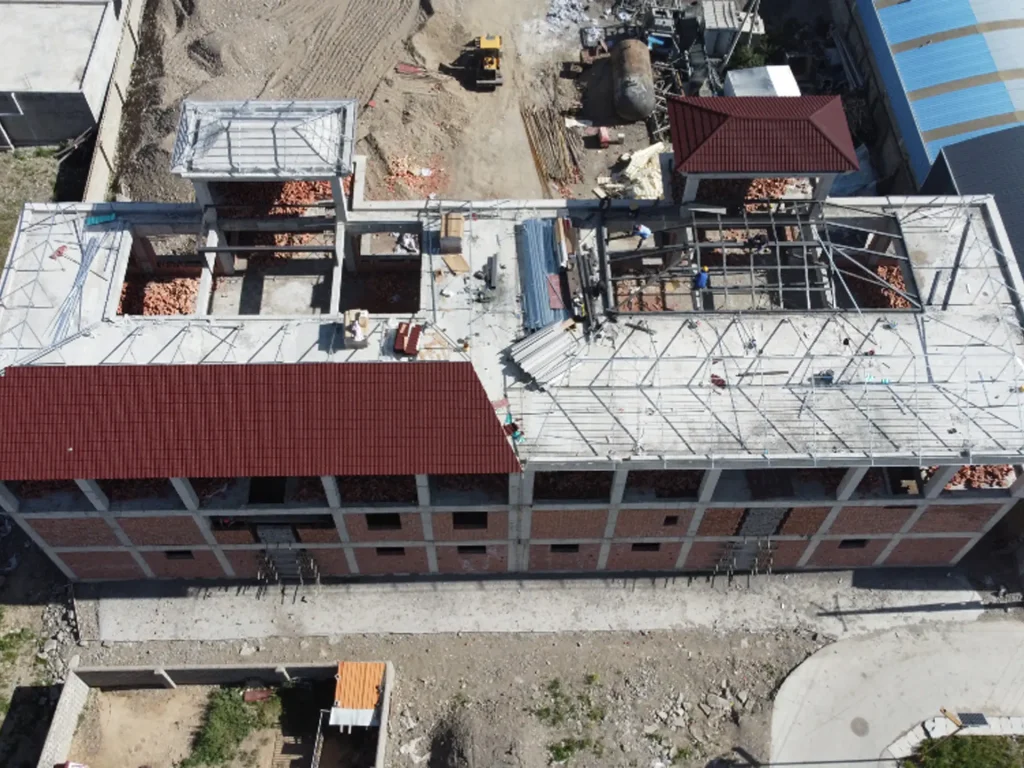
When choosing a roofing system, many buyers focus heavily on one question:
“Which roofing material is the best?”
They compare:
- Steel thickness
- Coating quality
- Roof tile design
- Surface finish
- Manufacturer price
However, experienced contractors understand a deeper reality:
A high-quality roofing material cannot achieve its expected performance without professional installation.
In many real-world construction projects, premature roof failures are not caused by the roofing product itself. They are caused by incorrect installation methods, unsuitable accessories, poor system integration, or insufficient technical understanding.
A roofing system is a combination of material quality + engineering design + installation execution.
At ROOFGLORY, a stone coated steel roofing manufacturer located in Linyi, Shandong, China, we work with global contractors, distributors, and developers who understand that installation quality directly determines project success.
This article explains why installation quality matters more than many buyers realize and how professional teams reduce roofing risks through proper installation practices.
1. The Reality: Even the Best Roofing Material Can Fail
A common misconception in construction is:
“If we purchase premium roofing materials, performance problems will not happen.”
This is not completely true.
Every roofing system has specific installation requirements.
If these requirements are ignored, problems may occur even with high-performance materials.
Examples include:
- Leakage after heavy rainfall
- Wind uplift damage
- Loose roofing components
- Poor drainage
- Premature corrosion
The reason is simple:
A roof is not just a product.
It is an engineered system.
2. Roofing Performance Depends on Three Critical Factors
Professional roofing performance usually depends on three elements:
2.1 Material quality
The roofing material determines:
- Basic durability
- Weather resistance
- Corrosion protection
- Expected service life
A reliable material provides the foundation.
However, it is only the first step.
2.2 System design
The roofing system must be designed according to:
- Climate conditions
- Building structure
- Roof slope
- Wind exposure
- Drainage requirements
A material that performs well in one project may not be suitable for another without proper system planning.
2.3 Installation execution
Installation determines whether the designed performance can actually be achieved.
This includes:
- Correct fastening
- Proper overlap
- Accurate alignment
- Accessory integration
- Waterproofing details
This is often the deciding factor between a roof lasting 5 years or 50 years.

3. Common Installation Mistakes That Cause Roofing Failure
3.1 Incorrect Fastener Installation
Fasteners may seem like a small component, but they directly affect roof reliability.
Common mistakes include:
- Using unsuitable screws
- Incorrect screw placement
- Over-tightening
- Under-tightening
- Damaging protective coatings
Each mistake creates potential weak points.
For example:
A damaged coating around a fastening point may expose the steel substrate, increasing corrosion risk.
4. Incorrect Roof Tile Alignment
Stone coated roofing systems often use interlocking designs.
The purpose of this structure is to:
- Improve wind resistance
- Guide water drainage
- Increase system stability
However, improper alignment can reduce these advantages.
Problems may include:
- Uneven installation
- Poor interlocking engagement
- Increased water penetration risk
Professional installers follow precise installation sequences to maintain system performance.
5. The Importance of Roof Accessories
One of the biggest mistakes in roofing projects is focusing only on the main roof tiles.
A complete roofing system also includes:
- Ridge caps
- Valley components
- Flashing
- Eave protection
- Ventilation components
A roof is only as reliable as its weakest connection point.
For example:
A high-quality roofing tile combined with poor flashing installation can still result in leakage.
6. Why Installation Is More Challenging in International Projects
For global construction projects, installation challenges become more complex.
Reasons include:
- Different construction standards
- Different labor experience levels
- Different climate conditions
- Different building structures
A roofing manufacturer should not only provide products.
It should provide technical support.
This is especially important for:
- Export projects
- Large developments
- Commercial buildings
7. Stone Coated Roofing Installation: Why System Knowledge Matters
Stone coated roofing is designed as a complete system.
Its installation requires understanding:
- Roof structure
- Tile positioning
- Fixing methods
- Water flow direction
- Accessory coordination
When properly installed, stone coated roofing provides:
- Strong wind resistance
- Long-term waterproof protection
- Stable appearance
- Reduced maintenance requirements
8. Why Cheap Installation Often Creates Expensive Problems
Many projects attempt to reduce costs by choosing the lowest installation quotation.
However, reducing installation quality may create hidden expenses:
- Repair costs
- Project delays
- Customer complaints
- Warranty disputes
For commercial projects, these risks can become much more expensive than the initial labor savings.
9. How Professional Contractors Control Installation Risk
Experienced contractors usually follow several principles.
9.1 Use manufacturer installation guidelines
Every roofing system has specific requirements.
Following these standards ensures the product performs as designed.
9.2 Train installation teams
A trained installer understands:
- Correct fixing methods
- Common failure points
- Safety requirements
- Detail treatment
9.3 Inspect critical areas
Professional teams pay special attention to:
- Roof edges
- Valleys
- Flashing areas
- Fastener locations
- Ventilation points
These areas determine long-term reliability.
10. Manufacturer Support Makes a Difference
For international B2B buyers, choosing a roofing manufacturer is not only about purchasing materials.
It is about choosing a technical partner.
A reliable manufacturer can support:
- Product specifications
- Installation documentation
- Project recommendations
- Technical communication
- Problem prevention
At ROOFGLORY, our factory in Linyi, Shandong, China works with international partners to provide not only stone coated roofing products but also project support.
Our goal is to help customers avoid installation problems before they happen.

11. Why Professional Projects Prefer Complete Roofing Systems
Large construction projects usually avoid mixing unrelated components because compatibility issues create risk.
A complete roofing system provides:
- Matched components
- Consistent quality
- Easier installation
- Better long-term reliability
This approach is especially important for:
- Hotels
- Resorts
- Villa communities
- Commercial developments
- Export housing projects
12. The Relationship Between Installation and Warranty Performance
Many roofing warranties depend on proper installation.
Incorrect installation may affect:
- Product performance
- Warranty claims
- Long-term durability
Therefore, professional buyers always consider:
- Who installs the roof?
- Are installation procedures followed?
- Is technical support available?
Conclusion: Roofing Success Is Built During Installation
Choosing the right roofing material is important.
But choosing the right installation approach is equally important.
A successful roofing project requires:
- High-quality materials
- Correct system design
- Professional installation
- Reliable supplier support
Stone coated roofing systems are engineered to provide decades of performance, but only when installed correctly.
For contractors, developers, and distributors, the best roofing investment is not simply buying better materials—it is building a complete roofing solution.
ROOFGLORY provides factory-direct stone coated steel roofing systems manufactured in Linyi, Shandong, China, supporting global partners with reliable products and technical cooperation.
Learn more about our roofing solutions: