Choosing the right villa roofing system is not simply a matter of selecting a roof tile that looks attractive. For builders, developers, architects, and roofing importers, the roof has to work with the villa’s architecture, local climate, structural design, installation conditions, and long-term maintenance requirements.
At ROOFGLORY, we work with international B2B buyers looking for roofing solutions for villas, residential developments, resorts, and other architectural projects. In many of these projects, the starting point is not simply “Which roof tile do you sell?” but rather “What type of roofing system makes sense for this building and this market?”
That distinction is important.
A Mediterranean villa, a tropical resort villa, and a modern luxury residence may all require completely different roofing solutions, even if they have a similar floor area.
This guide focuses on the factors that actually matter when selecting villa roofing, with particular attention to the needs of builders, developers, importers, and distributors.
Villa Roofing Starts With the Building, Not the Product
One of the most common mistakes when selecting roofing for a villa is starting with the product catalog.
A buyer sees a stone-coated tile, metal shingle, concrete tile, or cedar-look roof and immediately starts comparing prices.
But the better approach is to start with the building.
The first questions should be:
What architectural style does the villa have?
What is the roof geometry?
Where is the project located?
What weather conditions will the roof experience?
What type of roof structure is being used?
Is the roofing being purchased for one project or for distribution?
These questions determine which roofing products are worth considering in the first place.
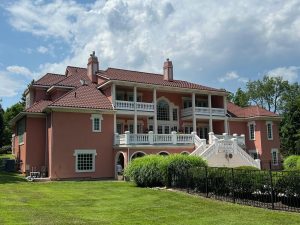
For example, a simple modern villa with a relatively low-pitched roof may work well with a clean metal roofing profile. A traditional villa with several steep roof sections may require a tile- or shingle-style product. A resort development surrounded by vegetation may benefit from a textured wood-look roof.
The same material cannot necessarily solve all of these requirements.
Roof shape also changes the material requirement
Villa roofs are often more complicated than the roofs of simple residential buildings.
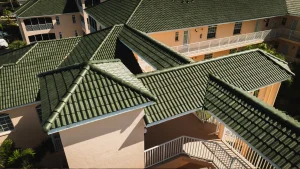
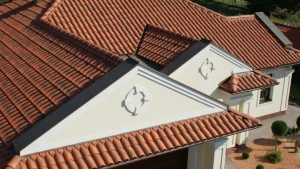
They may contain several roof planes, hips, valleys, dormers, large eaves, skylights, chimneys, and other architectural details.
This matters because a roofing system has to do more than cover the main roof surface.
It also needs to handle the transition points between different sections.
For example, valleys require effective water drainage. Hips and ridges require compatible finishing components. Roof penetrations require appropriate flashing. Large eaves may require additional detailing around the edge.
Therefore, when evaluating a villa roofing supplier, it is useful to look at the complete roofing system, not just the main tile.
A supplier that can provide matching ridge, hip, valley, flashing, and fastening components may be more useful for a complex villa project than a supplier offering only the main roofing tile.
Climate Should Influence the Roofing Specification
Once the architectural requirements are understood, the next question is climate.
This is particularly important for international B2B buyers because a roofing product that performs well in one market may require a different specification in another.
A villa in a dry inland region does not face the same conditions as a villa in a tropical coastal area.
Tropical and High-Rainfall Villas
Tropical villas can experience heavy rainfall, high humidity, strong sunlight, high temperatures, and seasonal storms.
In these environments, roofing selection should focus on the entire water-management system.
The important factors include:
- Roof pitch
- Tile overlap
- Interlocking design
- Underlayment
- Flashing
- Valleys
- Ridge details
- Gutters
- Fastening
- Roof penetrations
The main roofing material is only one part of the system.
A well-designed roofing product can still experience problems if the installation is incorrect or if water is allowed to accumulate around valleys and penetrations.
This is especially important for villas because their roof geometry can be complicated.
For buyers interested specifically in tropical applications, our discussion of interlocking roof tiles for tropical climates can be used alongside the product specification when evaluating a project.
Coastal Villas
Coastal projects introduce another consideration: salt exposure.
Salt-laden air can accelerate corrosion of exposed metal components, particularly when moisture and high temperatures are also present.
For a coastal villa, buyers should therefore look beyond the word “metal” and investigate the actual protection system.
Ask about:
- Metal substrate
- Coating
- Surface finish
- Fasteners
- Flashing
- Accessories
- Recommended maintenance
The main tile and the accessory system should be compatible.
There is little value in choosing a well-protected roofing tile if low-quality fasteners or incompatible flashing become the weak point of the system.
Hot-Climate Villas
Hot climates require attention to solar exposure and roof ventilation.
However, it would be too simplistic to say that one roofing material is automatically “cooler” than another.
Indoor thermal performance is influenced by the complete roof assembly, including:
- Roof color
- Surface finish
- Insulation
- Ventilation
- Air gap
- Ceiling construction
- Building orientation
For this reason, developers should discuss the roof assembly with the architect or building engineer rather than selecting a material based solely on its surface color.
Choosing Between Metal, Stone-Coated, Concrete, and Shingle-Style Roofing
Once the building and climate requirements are clear, the material comparison becomes much more useful.
For villa projects, several categories are commonly considered.
Interlocking Roof Tiles
Interlocking roof tiles are attractive for projects where the buyer wants a modular tile appearance combined with a defined overlap or interlocking system.
Depending on the material and profile, they can create the appearance of traditional tiles, shingles, or other architectural roofing styles.
For B2B buyers, the important specifications include:
- Tile dimensions
- Effective coverage
- Weight
- Material thickness
- Coating
- Fastening system
- Recommended roof pitch
- Accessories
A product should not be evaluated only by its nominal tile size.
Two tiles can have similar dimensions but completely different effective coverage.
For importers, cost per usable square meter is usually a more useful comparison than cost per individual tile.
Stone-Coated Steel Roofing
Stone-coated steel is another important category for villa projects.
It combines a metal substrate with a textured surface that can reproduce the appearance of different traditional roofing materials.
Depending on the profile, it can resemble:
- Traditional tiles
- Shingles
- Wood shakes
- Slate-style roofing
This makes it particularly useful for villas where the roof needs to contribute to the architectural appearance.
It can also provide a broader design range than a single conventional metal panel.
For a developer building multiple villas, this can be useful because the same basic roofing category may be available in several profiles and colors.
However, “stone-coated” should not be treated as a complete specification.
B2B buyers should still confirm the substrate, thickness, coating system, surface finish, dimensions, weight, accessories, and installation requirements.
Metal Shingles and Metal Shakes
Metal shingles and shakes are particularly interesting when the project requires a traditional residential appearance without using conventional asphalt or natural wood roofing.
A metal roof that looks like shingles can reproduce the visual rhythm of conventional shingles while using formed metal roofing.
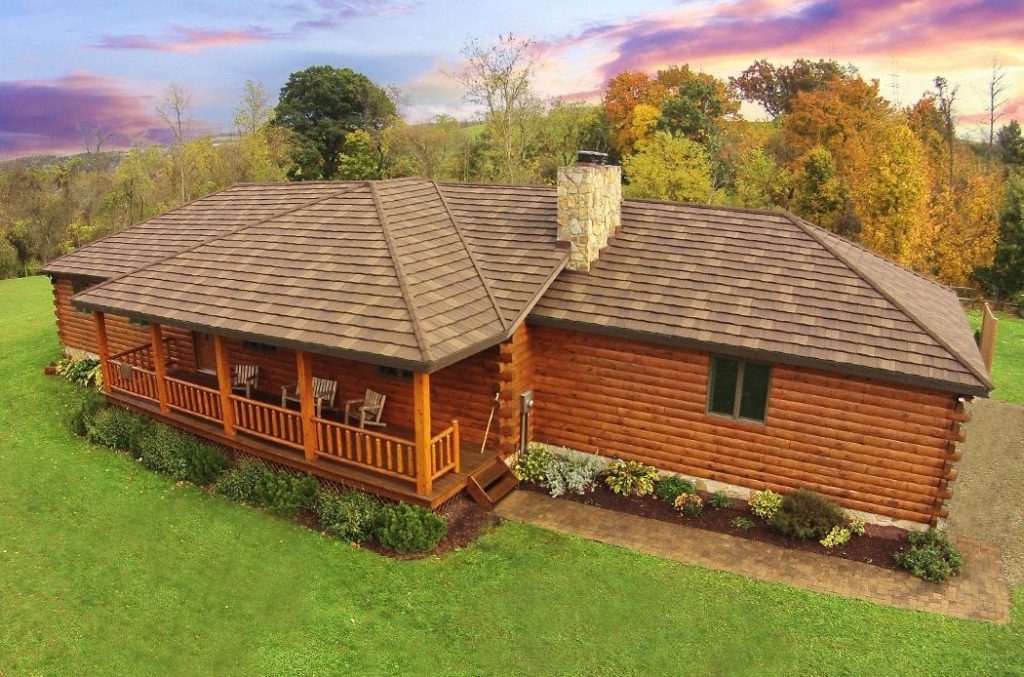
A metal cedar shake roof takes the concept further by creating a profile inspired by natural cedar shakes.
These products can work well for:
- Luxury villas
- Mountain residences
- Resort properties
- Country-style homes
- Holiday developments
- Natural or rustic architectural projects
The key advantage from an architectural perspective is flexibility.
The buyer can pursue a traditional appearance while still evaluating a manufactured metal roofing system.
For projects where the roof is highly visible, requesting a physical sample is strongly recommended.
Concrete Roof Tiles
Concrete tiles remain a practical choice for many residential projects.
They offer a familiar tile appearance and are widely understood by local contractors in many markets.
However, their higher material density can become an important consideration.
The weight of the roof affects:
- Structural requirements
- Transportation
- On-site handling
- Installation
- Renovation possibilities
For a new villa development, the structural engineer can account for this during design.
For a renovation project, however, the existing structure needs to be checked carefully before introducing a significantly heavier roofing system.
This is one reason lightweight metal roofing can be worth considering for certain villa projects.

The Roof Structure and Installation Can Change the Decision
The roofing material cannot be separated from the structure underneath it.
This is particularly important for B2B buyers who may be supplying roofing to projects designed by different architects and contractors.
A roofing product has to work with the actual supporting system.
For example, a buyer switching from a lightweight roofing material to heavy concrete tiles may need to reconsider structural loading.
Similarly, a metal roofing product may require a particular arrangement of purlins, battens, or fixing points.
This is why manufacturers should provide clear installation information.
Before ordering, ask:
- What is the minimum roof pitch?
- What substrate is required?
- How are the tiles fixed?
- How many fasteners are required?
- What is the recommended spacing?
- How are hips and ridges finished?
- How are valleys handled?
- What happens around roof penetrations?
These questions become even more important when the product is being introduced into a new market.
A roofing product may be technically suitable but still difficult to commercialize if local installers do not understand how to install it.
For distributors, installation documentation can therefore be part of the product’s commercial value.
Don’t Ignore the Roof’s Visual Appearance
Villa roofing is different from many industrial roofing applications because appearance is often one of the main reasons a customer chooses a particular property.
The roof can account for a significant portion of the visible exterior.
That means two products with similar technical performance may have very different commercial appeal.
Consider a few examples.
Modern Villa
A simple metal profile may complement clean architectural lines, large windows, concrete surfaces, and minimalist landscaping.
Mediterranean Villa
A tile-look profile may fit better with stucco walls, arches, balconies, and traditional detailing.
Mountain Villa
A cedar-look metal shake can create a stronger connection with natural surroundings.
Tropical Resort Villa
A textured stone-coated or tile-look roofing system may provide a more traditional resort appearance.
The point is not that one material belongs exclusively to one architectural style.
Rather, the roofing profile should be selected as part of the overall architectural concept.
This is particularly important for developers.
A developer building 50 or 100 villas is not simply purchasing roofing materials. They are establishing a consistent visual identity across an entire project.
What B2B Buyers Should Evaluate Before Importing Villa Roofing
For an importer, the purchasing decision is much broader than choosing the cheapest quotation.
The real question is:
What will this roofing system cost to purchase, transport, install, maintain, and support in my market?
That requires several layers of evaluation.
Product Cost vs Effective Coverage
Never compare suppliers only by price per piece.
Instead, calculate the price based on effective roof coverage.
For example:
Price per usable m² = Product price ÷ effective coverage
This provides a much more useful comparison between products with different dimensions.
Container Loading
For imported roofing, logistics can have a significant effect on the final price.
Ask the supplier for:
- Pieces per package
- Package dimensions
- Gross weight
- Square meters per package
- Square meters per container
- Accessory quantities
- Loading configuration
A product with a slightly higher factory price may have a more favorable landed cost if it can be packed and transported efficiently.
Accessories
Ask whether the supplier can provide matching:
- Ridge components
- Hip components
- Valley components
- Flashing
- Eave components
- Fasteners
- Other installation accessories
A roofing system should be evaluated as a complete package.
Production Consistency
This is particularly important for multi-villa developments.
Imagine completing the first 20 villas and then discovering that a later batch has a noticeably different color or surface finish.
That can create a significant visual problem.
For large projects, buyers should confirm:
- Color consistency
- Coating consistency
- Dimensional tolerance
- Quality-control procedures
- Batch management
Samples should ideally be approved before bulk production.
How to Calculate the Real Cost of Villa Roofing
For B2B projects, the factory quotation is only the beginning.
A more useful calculation is:
Landed cost = Product + Packaging + Inland freight + Ocean freight + Insurance + Import costs + Local transportation
Then consider:
Total project cost = Landed material cost + Accessories + Installation + Related structural work
This approach can produce very different results from a simple product-price comparison.
For example, a heavier roofing material may have a competitive factory price but create higher transportation and structural costs.
A lightweight imported roofing system may have a higher unit price but offer advantages in shipping and handling.
The correct comparison depends on the project.

Why Samples Matter for Villa Roofing
For a standard industrial building, a minor visual difference may not be particularly important.
For a luxury villa, it can be.
Before placing a large order, buyers should inspect samples for:
- Color
- Texture
- Surface finish
- Profile depth
- Edge quality
- Thickness
- Interlocking fit
- Coating consistency
A photograph on a website is useful for initial research, but it cannot replace a physical sample.
This is especially important when the roofing product will be used across multiple villas.
An approved sample can become the reference standard for future production.
What Makes a Good Villa Roofing Manufacturer?
For B2B buyers, supplier selection should go beyond the question of whether the manufacturer has a factory.
A capable roofing supplier should be able to discuss the product from several perspectives.
Technical
Can they explain the material, coating, dimensions, effective coverage, weight, and installation method?
Commercial
Can they provide a clear MOQ, lead time, packaging specification, and quotation?
Production
Can they maintain consistent quality across repeat orders?
Export
Can they package the products appropriately for international transportation?
Project Support
Can they provide samples, technical information, and accessory recommendations?
These capabilities become increasingly important as project size increases.
A supplier for a single small residential project may not need the same capabilities as a manufacturer supplying hundreds of villas to an international developer.
Villa Roofing Is Ultimately a Project Decision
There is no universal roofing material that is right for every villa.
The better question is:
What roofing system fits this particular project?
Start with the architectural design.
Then evaluate the climate.
Then consider the roof structure and installation method.
After that, compare the available materials based on effective coverage, weight, appearance, durability, logistics, and total cost.
For B2B buyers, add another layer:
Can the manufacturer supply the same specification consistently for future orders?
That question matters enormously for developers and distributors.
A roofing product is only commercially useful if it can be sourced reliably, installed correctly, and supported after the sale.
Villa Roofing from ROOFGLORY
ROOFGLORY is a roofing manufacturer based in Linyi, Shandong, China, supplying roofing products to international B2B customers.
For villa projects, the company can work with buyers around different roofing requirements rather than treating every project as a standard product order.
Depending on the architectural style and market, buyers may consider:
- Interlocking roof tiles
- Stone-coated steel roofing
- Metal shingles
- Metal shakes
- Cedar-look metal roofing
- Other residential roofing profiles
For buyers exploring wood-inspired designs, the ROOFGLORY metal shake roofing range provides a starting point for evaluating cedar-shake-style metal roofing.
For importers and developers, the discussion can also include:
- Product specifications
- Colors
- Samples
- Accessories
- Packaging
- Container loading
- MOQ
- Production lead time
- Export requirements
The objective is not simply to sell a roofing tile, but to match the roofing specification with the actual project.
Final Thoughts
Good villa roofing starts with understanding the building rather than choosing a product from a catalog.
The most important considerations are closely connected:
Architecture determines appearance.
Climate determines performance requirements.
Roof structure influences material selection.
Roof geometry affects installation and waterproofing.
Material specifications influence logistics and cost.
Supplier capability determines whether the system can be delivered consistently.
For a single villa, these factors can help the builder select an appropriate roofing system.
For a large residential development, they become even more important because the same decision may affect hundreds of roofs, thousands of square meters of material, and a long-term supply relationship.
For international B2B buyers considering villa roofing from China, the best starting point is not simply asking for a price list. Provide the manufacturer with the project location, architectural style, approximate roof area, roof design, preferred appearance, and estimated quantity.
With that information, a supplier such as ROOFGLORY can help narrow the options and develop a roofing specification around the actual project rather than selling a product based only on a catalog photograph.