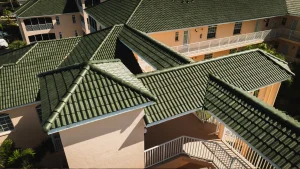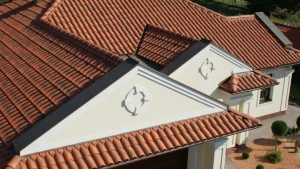

Interlocking roof tiles are often described as a roofing solution that improves water drainage, installation efficiency, and roof stability through the way individual tiles connect with one another. But for importers, distributors, contractors, and developers, the more important question is not simply “What are interlocking roof tiles?”
It is:
How do interlocking roof tiles work, what should buyers look for, and how do you select the right supplier for a commercial or residential roofing project?
The answer involves much more than tile shape.
The interlocking mechanism, material, dimensions, weight, coating, accessories, installation method, roof design, climate, packaging, and manufacturing consistency can all affect the final performance of an interlocking roofing system.
For buyers sourcing roofing products internationally, these details are particularly important. A roofing tile may look excellent in a catalog, but if its dimensions vary between production batches, if the interlocking points do not fit accurately, or if packaging is inadequate for overseas transportation, the purchasing cost can quickly become secondary to the operational problems that follow.
This guide examines interlocking roof tiles from a practical B2B perspective, covering product design, installation, applications, cost considerations, supplier evaluation, and the questions importers should ask before placing an order.
ROOFGLORY is a roofing manufacturer based in Linyi, Shandong, China, supplying stone-coated roofing products to international customers.
Explore ROOFGLORY roofing products
What Are Interlocking Roof Tiles?
Interlocking roof tiles are roofing tiles designed with connecting features that allow adjacent tiles to overlap or engage with one another.
Instead of relying entirely on a simple overlapping arrangement, the geometry of an interlocking tile creates a more structured connection between neighboring roofing units.
Depending on the design, these features can include:
- Side interlocks
- Head interlocks
- Overlapping edges
- Grooves
- Ridges
- Tongue-and-groove-style connections
The exact design varies by manufacturer and roofing profile.
The purpose is generally to create a more controlled roofing surface while helping manage water movement and maintaining alignment between individual tiles.
This makes the design particularly interesting for projects where installation efficiency, appearance, and consistent roof geometry are important.
How Do Interlocking Roof Tiles Work?
The basic principle is relatively simple.
Individual roofing tiles are positioned so that their edges or specially formed sections connect with adjacent tiles.
When installed correctly, the interlocking geometry creates a layered roofing surface.
Rainwater is directed across the roof rather than being allowed to travel freely through the joints.
At the same time, the interlocking profile helps maintain the relative position of neighboring tiles.
However, an important point for B2B buyers is that interlocking does not mean the tiles simply snap together and require no fastening.
Most roofing systems still require appropriate mechanical fastening and installation according to the manufacturer’s instructions.
The interlocking geometry is one component of the roofing system, not a substitute for proper installation.
Why Are Interlocking Roof Tiles Becoming More Popular?
The growing interest in interlocking roof tiles is closely related to the changing requirements of modern construction.
Builders and developers increasingly want roofing materials that can combine:
- Traditional appearance
- Reliable weather protection
- Efficient installation
- Consistent dimensions
- Lower maintenance
- Attractive project economics
Interlocking designs can help address several of these requirements simultaneously.
They can also provide a more uniform appearance than roofing systems where individual tiles are simply laid with less structured positioning.
For large residential developments, this consistency can become especially valuable.

Interlocking Roof Tiles vs Traditional Overlapping Tiles
The difference is primarily in the geometry.
Traditional tiles may rely heavily on overlapping surfaces to prevent water from entering the roof assembly.
Interlocking tiles introduce additional connecting geometry.
This can help create a more controlled arrangement between adjacent units.
However, buyers should not assume that an interlocking design automatically means better performance in every application.
The effectiveness of a roofing system still depends on:
- Tile design
- Material
- Roof pitch
- Installation
- Flashing
- Underlayment
- Climate
Therefore, the correct comparison should be between complete roofing systems rather than tile shapes alone.
What Materials Are Used for Interlocking Roof Tiles?
Interlocking roof tiles are available in several materials.
The most common categories include:
Concrete Interlocking Roof Tiles
Concrete tiles are widely used in residential construction.
They offer a substantial appearance and can be produced in many profiles.
Their main consideration is weight.
For larger projects, the structural and logistics implications of heavy roofing materials should be considered carefully.
Clay Interlocking Roof Tiles
Clay provides a traditional architectural appearance and has been used for centuries.
It is particularly popular in Mediterranean, European, and traditional architectural styles.
However, clay tiles can be relatively fragile during transportation and handling.
Metal Interlocking Roof Tiles
Metal provides a significantly different approach.
A steel substrate can be formed into an interlocking profile while maintaining a relatively lightweight structure.
This can be useful for projects where developers want the visual appearance of traditional tiles but want to reduce roofing weight.
Stone-Coated Interlocking Roof Tiles
One particularly interesting category is stone-coated interlocking roof tiles.
These products typically combine a steel substrate with protective coating layers and a stone-granule surface.
The result is a roofing tile with:
- A metal structural base
- Textured surface
- Architectural appearance
- Interlocking geometry
This combination is increasingly relevant for developers and distributors looking for alternatives to traditional heavy roofing materials.
ROOFGLORY manufactures stone-coated roofing products for international B2B markets.
View ROOFGLORY’s stone-coated roofing solutions
Why Interlocking Design Matters for Water Management
Water management is one of the fundamental functions of any roof.
The roof needs to move rainwater from the upper surface toward drainage points while preventing water from entering the building envelope.
Interlocking geometry can help control how water moves across the joints between individual tiles.
However, the tile itself is only one part of the system.
Roof pitch, underlayment, flashing, valleys, ridges, and drainage design all remain important.
For regions with heavy rainfall, these factors should be considered during product selection.
Are Interlocking Roof Tiles Waterproof?
It would be inaccurate to describe any individual roofing tile as completely waterproof under every condition.
A roofing system is designed to manage water through a combination of:
tile geometry + overlapping/interlocking + underlayment + flashing + roof pitch + installation
When these components work together correctly, the system can provide effective protection against rain.
For B2B buyers, this is why installation documentation is just as important as the product itself.
Interlocking Roof Tiles and Wind Resistance
Wind is another major consideration.
Strong winds can place significant forces on roofing materials.
Interlocking geometry may help maintain alignment between adjacent tiles, but it does not eliminate the need for mechanical fastening.
The required fastening method depends on:
- Roof design
- Tile profile
- Local wind conditions
- Building height
- Exposure
- Manufacturer requirements
Projects in high-wind regions should therefore be evaluated according to local building codes and engineering requirements.
Interlocking Roof Tiles and Installation Efficiency
One of the practical benefits of an interlocking design is the potential for more predictable installation.
The geometry provides a reference point for positioning adjacent tiles.
For contractors, this can help with:
- Alignment
- Spacing
- Consistency
- Installation workflow
On a large development, even small improvements in installation efficiency can have a meaningful impact on total labor cost.
If a project contains hundreds or thousands of square meters of roofing, installation speed becomes a commercial factor rather than simply a technical detail.
Why Dimensional Accuracy Is Critical
This is one of the most overlooked aspects of interlocking roof tiles.
An interlocking system depends on accurate geometry.
If the dimensions vary significantly, the tiles may not fit together consistently.
Potential consequences include:
- Uneven roof lines
- Difficult installation
- Visible gaps
- Increased labor
- Inconsistent appearance
For importers, this makes manufacturing quality control particularly important.
A supplier should be able to maintain consistent dimensions across production batches.
Why Importers Should Request Samples Before Bulk Orders
A product sample is useful for evaluating much more than appearance.
When receiving a sample of interlocking roof tiles, buyers should examine:
- Overall dimensions
- Thickness
- Weight
- Interlocking geometry
- Surface finish
- Edge quality
- Color consistency
- Packaging
Try fitting multiple samples together rather than examining only one tile.
This can reveal whether the interlocking geometry is precise enough to produce a consistent installation.
For B2B purchasing, this is a relatively simple step that can prevent expensive problems later.
Interlocking Roof Tiles for Residential Developments
Interlocking roof tiles can be particularly suitable for residential projects where appearance and installation efficiency are both important.
Applications include:
- Detached houses
- Villas
- Townhouses
- Residential communities
- Luxury homes
The wide variety of available profiles allows developers to match different architectural styles.
For premium residential projects, stone-coated metal interlocking tiles can provide a more textured appearance than conventional smooth metal roofing.
Interlocking Roof Tiles for Villas
Villas are one of the most visually demanding applications for roofing materials.
The roof often occupies a large portion of the building’s exterior appearance.
A well-designed interlocking tile can complement:
- Mediterranean villas
- Contemporary villas
- Resort villas
- Traditional residences
- Mountain properties
For developers, the advantage is that the roofing material can contribute to architectural differentiation without necessarily requiring extremely heavy traditional tiles.
Interlocking Roof Tiles for Resorts
Resort developers often need roofing materials that balance appearance, durability, logistics, and maintenance.
The roof needs to look appropriate for the project’s positioning while also coping with repeated exposure to the local climate.
For resort projects, other considerations may include:
- Replacement availability
- Installation time
- Maintenance access
- Color consistency across buildings
- Long-term supplier support
A roofing material that performs well on one building but cannot be sourced consistently later may create unnecessary problems for a resort operator.
Interlocking Roof Tiles for Commercial Buildings
Commercial applications require a slightly different approach.
For a commercial project, buyers may prioritize:
- Cost per square meter
- Installation speed
- Service life
- Maintenance
- Weather resistance
- Procurement reliability
The appearance still matters, particularly for hotels, restaurants, retail developments, and mixed-use properties.
But the financial consequences of roofing failure can be more significant.
A leak in a commercial building can affect inventory, equipment, interior finishes, or business operations.
Therefore, commercial buyers should evaluate the complete roofing system rather than focusing only on the appearance of the tile.

Interlocking Roof Tiles for Different Climates
The ideal roofing specification depends heavily on climate.
Hot and Sunny Regions
Consider:
- UV exposure
- Surface temperature
- Thermal movement
- Ventilation
Tropical Regions
Consider:
- Heavy rainfall
- Humidity
- Mold and moisture management
- Wind
Coastal Regions
Consider:
- Salt exposure
- Corrosion protection
- Fastener selection
Cold Regions
Consider:
- Snow
- Ice
- Freeze-thaw cycles
- Thermal movement
The manufacturer should know the destination market before recommending a product specification.
How Much Do Interlocking Roof Tiles Cost?
The price of interlocking roof tiles varies significantly.
There is no single global price because cost depends on:
- Material
- Tile size
- Thickness
- Coating
- Profile
- Quantity
- Manufacturer
- Destination market
- Shipping
For importers, the factory price is only one component of total procurement cost.
The more useful calculation is:
Product cost + packaging + inland transportation + shipping + duties + installation
This gives a more realistic landed cost.
Why Cheap Interlocking Roof Tiles Can Become Expensive
A low quotation can be attractive during procurement.
But buyers should investigate why the price is lower.
Possible differences may exist in:
- Steel thickness
- Coating
- Surface treatment
- Stone granules
- Manufacturing precision
- Packaging
The cheapest product may not necessarily provide the lowest total project cost.
For distributors, inconsistent product quality can also lead to customer complaints and warranty claims.
How to Choose an Interlocking Roof Tile Manufacturer
For B2B buyers, supplier evaluation should include both technical and commercial factors.
Manufacturing Capability
Ask:
- Where is the factory located?
- What is the production capacity?
- What products are manufactured?
- How long has the factory been producing roofing products?
Product Specifications
Confirm:
- Dimensions
- Weight
- Steel specification
- Coating
- Surface finish
Quality Control
Ask how the manufacturer controls:
- Raw materials
- Dimensions
- Coating
- Granule adhesion
- Finished products
Export Capability
International buyers should also consider:
- Export experience
- Packaging
- Container loading
- Documentation
- Communication
A supplier that understands international logistics can reduce many avoidable problems.
Why Buying From a Chinese Manufacturer Can Be Attractive
China has a large and established building-material manufacturing sector.
For international roofing importers, sourcing directly from a Chinese manufacturer can provide access to:
- Large production capacity
- Competitive manufacturing costs
- Product variety
- OEM options
- Customization
However, the benefits depend on supplier selection.
Not every factory has the same production standards.
The buyer still needs to verify the actual manufacturer and product specifications.
ROOFGLORY: Stone-Coated Roofing Manufacturer in China
ROOFGLORY is a stone-coated roofing manufacturer located in Linyi, Shandong, China.
We work with international B2B customers including roofing importers, distributors, contractors, and developers.
Our products are designed for customers looking for roofing solutions that combine practical metal construction with traditional architectural styles.
For buyers interested in interlocking and stone-coated roofing solutions, we can discuss product profiles, dimensions, colors, quantities, packaging, and project requirements.
Our existing roofing product range also includes shake-style solutions:
If you are an importer evaluating Chinese roofing manufacturers, providing your destination country, estimated order quantity, preferred profile, and target application will allow our team to recommend a suitable product configuration.
Interlocking Roof Tiles: What Should Importers Ask Before Ordering?
Before placing a bulk order, buyers should clarify several points.
1. What is the exact tile dimension?
Do not rely only on the nominal product name.
Confirm actual dimensions and effective coverage.
2. How many tiles are required per square meter?
This affects both product quantity and project cost.
3. What is the weight per tile and per square meter?
This is important for structural planning and shipping calculations.
4. What steel specification is used?
Confirm the actual material rather than assuming all metal tiles are equivalent.
5. What coating system is used?
This affects environmental performance and appearance.
6. How are the tiles packaged?
This is critical for international shipping.
7. What installation method is recommended?
Request installation documentation before the product reaches the project site.
8. Can the manufacturer maintain the same product in future orders?
This matters for distributors and multi-phase developments.
Interlocking Roof Tiles and Long-Term Supplier Relationships
For a one-time construction project, supplier selection is already important.
For a distributor, it is even more important.
A distributor may need to reorder the same product for years.
If the manufacturer changes:
- Tile dimensions
- Color
- Profile
- Coating
- Packaging
without proper communication, the distributor can face inventory and customer-service problems.
Therefore, long-term product consistency should be part of supplier evaluation.
Common Mistakes When Buying Interlocking Roof Tiles
One common mistake is choosing based entirely on appearance.
A beautiful tile does not guarantee:
- Dimensional consistency
- Suitable material specifications
- Good packaging
- Reliable production
Another mistake is comparing suppliers solely by price.
A third is failing to tell the manufacturer where the product will be installed.
Climate can influence product requirements, so the destination market should always be communicated.
Finally, buyers sometimes treat installation as the contractor’s problem.
In reality, the product and installation method should be considered together.
Interlocking Roof Tiles: A Better Way to Evaluate Them
Rather than asking whether interlocking roof tiles are “good,” consider five questions:
Does the profile suit the architecture?
Does the material suit the climate?
Is the product manufactured consistently?
Can local contractors install it correctly?
Can the supplier support the project long term?
If the answer to all five is yes, the product has a much stronger business case.
Final Thoughts
Interlocking roof tiles are more than a particular tile shape.
They represent a roofing approach in which the geometry of individual tiles plays an important role in alignment, water management, appearance, and installation.
For B2B buyers, the most important factors are not limited to the visible surface.
The underlying material, dimensional accuracy, coating system, manufacturing consistency, packaging, installation requirements, and supplier reliability all influence the value of the product.
For residential developments, villas, resorts, and other projects where traditional roofing aesthetics are important, stone-coated interlocking roof tiles can be particularly interesting.
They offer manufacturers the ability to combine a steel substrate with textured architectural finishes and interlocking profiles.
For importers, however, the best purchasing decision is not necessarily the product with the lowest factory price.
It is the product that provides the best balance of quality, cost, logistics, installation efficiency, appearance, and long-term supplier support.
If you are sourcing interlocking roof tiles from China for distribution or a construction project, ROOFGLORY can provide product specifications, samples, bulk-order information, and project quotations.
Frequently Asked Questions About Interlocking Roof Tiles
What are interlocking roof tiles?
Interlocking roof tiles are roofing tiles designed with connecting or overlapping features that allow adjacent tiles to fit together in a more structured arrangement.
Are interlocking roof tiles better than traditional roof tiles?
They can provide advantages in alignment, installation, and water-management design, but performance depends on the specific material, profile, roof design, and installation method.
Are interlocking roof tiles waterproof?
The complete roofing system is designed to manage rainwater through tile geometry, overlap, underlayment, flashing, roof pitch, and correct installation. The tile should not be evaluated independently from the rest of the roof system.
Are metal interlocking roof tiles lightweight?
Metal interlocking tiles are generally much lighter than many concrete or clay roofing systems, although exact weight varies according to the product specification.
Can interlocking roof tiles be used for villas?
Yes. They are suitable for many villa designs, including traditional, Mediterranean, contemporary, and resort-style architecture.
Are stone-coated interlocking roof tiles suitable for international markets?
They can be suitable for international applications, provided the product specification is appropriate for the local climate, building requirements, and installation practices.
How much do interlocking roof tiles cost?
Pricing depends on material, dimensions, coating, profile, order quantity, supplier, and destination. Importers should calculate landed cost rather than comparing factory price alone.
What should I check before importing interlocking roof tiles?
Check dimensions, effective coverage, weight, steel specification, coating, surface finish, packaging, installation requirements, production capacity, and supplier experience.
Can ROOFGLORY supply interlocking roof tiles for wholesale projects?
ROOFGLORY is a B2B roofing manufacturer in Linyi, Shandong, China. International buyers can contact the company with their required profile, quantity, destination, and project details for product and quotation information.