When selecting roofing materials for a construction project, most buyers focus on:
- Appearance
- Price
- Durability
- Weather resistance
However, one critical factor is often overlooked:
Roofing weight.
The weight of a roofing system directly influences:
- Building structural requirements
- Construction cost
- Transportation efficiency
- Installation difficulty
- Long-term building performance
For residential villas, commercial buildings, and large-scale developments, roofing weight is not simply a material specification—it is an engineering consideration.
A heavier roof requires stronger supporting structures, while a lightweight but durable roofing system can provide significant advantages during design and construction.
At ROOFGLORY, a stone coated steel roofing manufacturer based in Linyi, Shandong, China, we work with global contractors and developers who evaluate roofing materials based on complete project requirements, not only product appearance.
This article explains how roofing weight affects building safety, why lightweight roofing systems are becoming increasingly popular, and how stone coated steel roofing provides a balanced solution between strength and structural efficiency.
1. Why Roofing Weight Matters in Construction Projects
The roof is one of the largest components of a building.
Even a small difference in weight per square meter can create a significant impact when multiplied across thousands of square meters.
For example:
A 5 kg difference per square meter on a 10,000 m² roof represents:
50,000 kg of additional structural load.
That additional weight affects:
- Roof framing requirements
- Supporting columns
- Foundation design
- Transportation cost
- Installation equipment
Therefore, roofing weight should be considered during the early design stage—not after construction begins.
2. The Relationship Between Roof Weight and Structural Safety
A building structure is designed according to expected loads, including:
- Dead load
- Live load
- Wind load
- Snow load
- Seismic considerations
The roofing system contributes to the dead load.
Dead load refers to the permanent weight of building components, including:
- Roof covering
- Supporting structures
- Insulation layers
- Accessories
A heavier roofing system increases the permanent load that the building must support.

3. Heavy Roofing Materials: Advantages and Challenges
Traditional roofing materials such as clay tiles and concrete tiles have been used for centuries.
They offer advantages including:
- Natural appearance
- Strong durability
- Fire resistance
However, their weight creates engineering challenges.
3.1 Increased structural requirements
Heavy roofing materials often require:
- Stronger roof framing
- Additional reinforcement
- Higher construction costs
For new construction projects, this may increase material usage.
For renovation projects, structural reinforcement may become necessary.
3.2 Higher transportation and handling costs
Weight also affects logistics.
Heavy materials create:
- Higher shipping costs
- More complex handling
- Increased labor requirements
This is especially important for international projects where transportation represents a significant portion of total cost.
4. Lightweight Roofing Systems and Modern Construction
Modern construction increasingly focuses on:
- Structural efficiency
- Reduced material consumption
- Faster installation
- Lower transportation impact
This has increased demand for lightweight roofing solutions.
However, lightweight does not mean weak.
The goal is:
Maximum performance with optimized structural load.
5. Stone Coated Steel Roofing Weight Advantage
Stone coated steel roofing provides an important balance:
- Lightweight structure
- High durability
- Strong weather resistance
The core structure typically includes:
- High-strength steel substrate
- Protective aluminum-zinc coating
- Stone granule surface layer
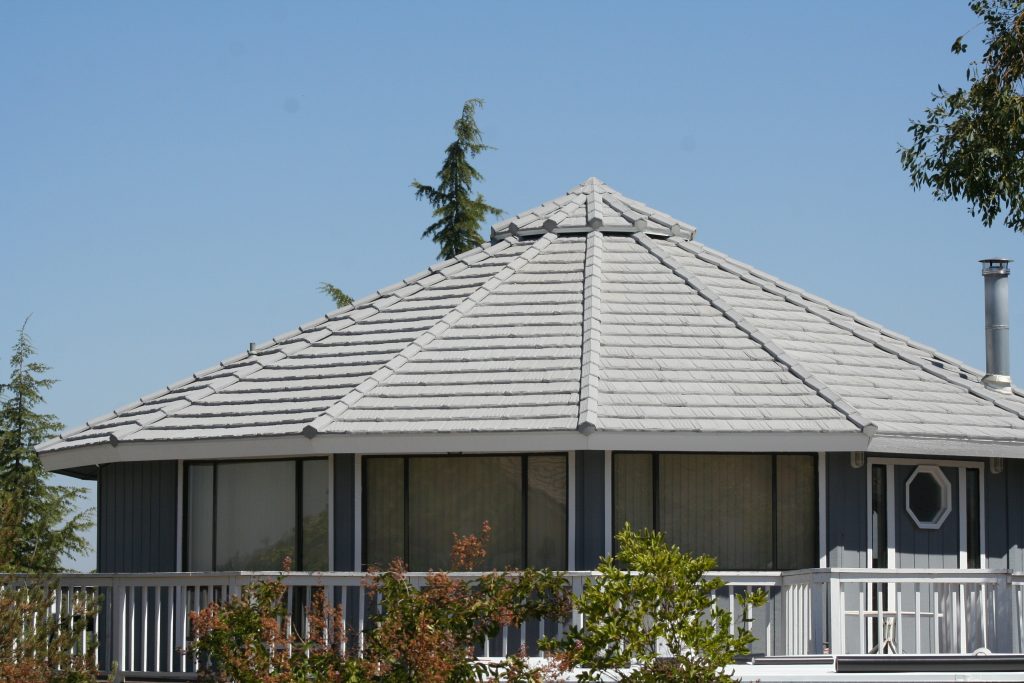
Although it provides a traditional tile appearance, its steel structure keeps overall weight significantly lower than many conventional tile systems.
6. Why Lower Roofing Weight Benefits Building Design
6.1 Reduced structural demand
A lighter roof can reduce pressure on:
- Roof trusses
- Supporting walls
- Columns
- Foundations
This provides more flexibility during building design.
6.2 Easier renovation applications
Roof replacement projects often face structural limitations.
A heavy replacement roof may exceed existing load capacity.
Lightweight stone coated roofing can be suitable for:
- Villa renovation
- Residential upgrades
- Commercial remodeling projects
because it minimizes additional structural stress.
6.3 Faster installation
Lightweight roofing materials are easier to:
- Transport on site
- Lift into position
- Install manually
This can improve construction efficiency.
7. Roofing Weight and Wind Resistance: A Common Misunderstanding
Some buyers assume:
“A heavier roof must perform better in strong winds.”
However, wind resistance is not determined by weight alone.
A roofing system’s wind performance depends on:
- Roof design
- Fastening method
- Interlocking structure
- Installation quality
- Building geometry
A properly engineered lightweight roofing system can achieve excellent wind resistance.
8. Roofing Weight in Different Building Applications
Different projects have different weight requirements.
Villa and Residential Projects
Key considerations:
- Appearance
- Comfort
- Structural efficiency
Stone coated roofing provides traditional tile aesthetics without excessive structural loading.
Commercial Buildings
Key considerations:
- Long-term operating cost
- Installation efficiency
- Maintenance reduction
Lower roof weight can simplify large-scale construction.
Industrial Buildings
Key considerations:
- Large roof areas
- Fast installation
- Logistics efficiency
Lightweight roofing systems can improve project speed.

9. Why Roofing Weight Matters More in International Projects
For export construction projects, weight affects the entire supply chain.
Important factors include:
- Container loading efficiency
- Shipping cost
- Local handling requirements
- Installation resources
A lightweight roofing solution can create advantages from factory to construction site.
10. How Contractors Evaluate Roofing Weight Professionally
Experienced contractors consider:
Weight per square meter
Not only the product weight, but the complete system weight.
Structural compatibility
Can the existing or planned building safely support the roofing system?
Long-term performance
Does the weight reduction compromise durability?
Installation practicality
Can local teams install efficiently?
11. Why Stone Coated Steel Roofing Is Suitable for Modern Construction
The popularity of stone coated steel roofing comes from its balance:
It provides:
- The appearance of traditional roofing materials
- Lower structural weight
- Strong weather resistance
- Long service life
- Installation efficiency
This makes it suitable for projects where both design and engineering performance matter.
12. ROOFGLORY: Lightweight Roofing Solutions for Global Projects
At ROOFGLORY, our stone coated steel roofing systems are manufactured in Linyi, Shandong, China, serving international B2B markets.
We support contractors, distributors, and developers with:
- Different roofing profiles
- Project-based recommendations
- Technical specifications
- Export solutions
Our focus is not only producing roofing tiles, but helping partners select roofing systems that match real construction requirements.
Conclusion: Roofing Weight Is a Design Decision, Not Just a Product Feature
Roofing weight influences:
- Structural safety
- Construction cost
- Transportation efficiency
- Installation process
- Long-term building performance
The best roofing solution is not always the heaviest or the cheapest.
It is the system that provides the right balance between:
- Strength
- Durability
- Weight efficiency
- Lifecycle value
Stone coated steel roofing has become a preferred choice for many modern construction projects because it delivers reliable performance while reducing unnecessary structural load.
For contractors and developers looking for lightweight, durable roofing solutions, ROOFGLORY provides factory-direct stone coated roofing systems manufactured in Linyi, Shandong, China.
Learn more: