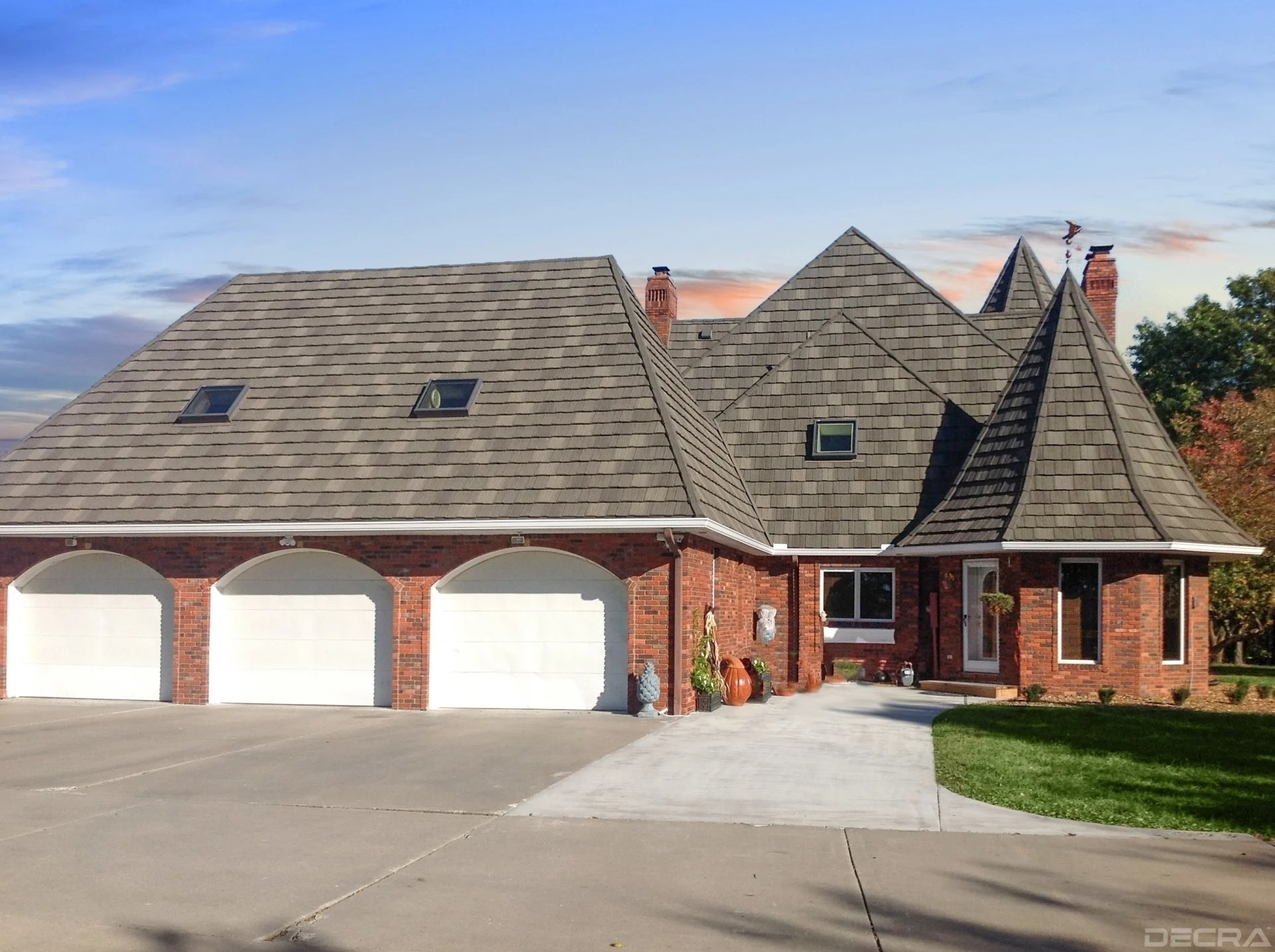
Homeowners, builders, and property developers increasingly want roofing that combines the familiar appearance of traditional shingles with the practical advantages of modern metal materials. New metal roofs that look like shingles offer an alternative to conventional roofing, allowing buildings to achieve a classic architectural style without relying on traditional materials such as asphalt or wood.
For importers, distributors, and construction professionals, understanding these roofing systems involves more than comparing colors and surface textures. The material, panel profile, interlocking design, installation method, and accessory requirements all influence performance and total project cost. ROOFGLORY, a stone-coated steel roofing manufacturer based in Linyi, Shandong, China, works with B2B buyers seeking roofing solutions for residential developments, villas, and other construction projects.
One option worth considering is stone-coated steel roofing, which combines a metal substrate with a stone-granule surface and can be manufactured in profiles inspired by traditional shingles and roof tiles. When designed with interlocking features, these products can provide a coordinated roofing system with a distinctive appearance and a practical installation layout.
1. What Are New Metal Roofs That Look Like Shingles?
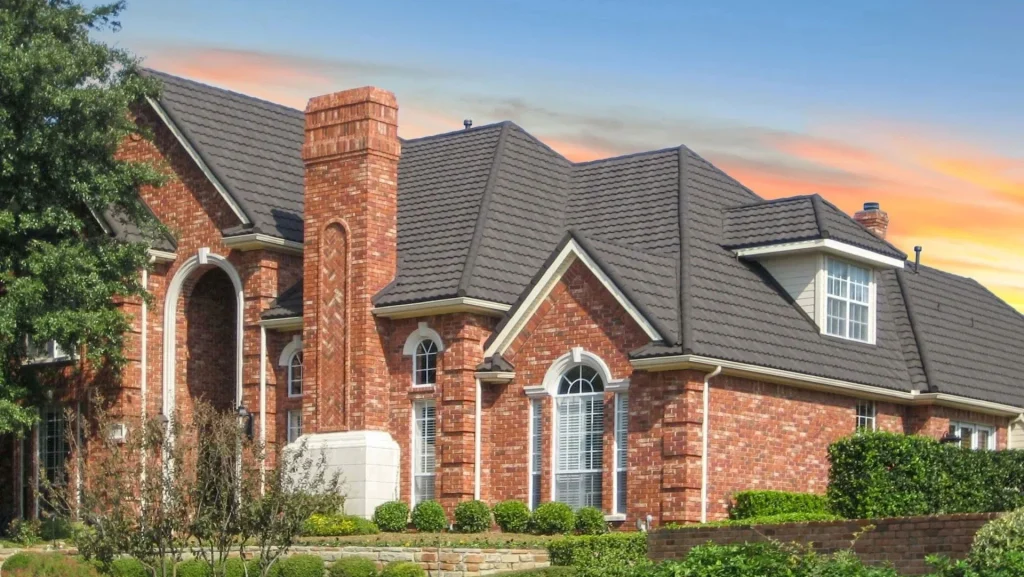
New metal roofs that look like shingles are roofing products designed to reproduce the appearance of traditional roofing materials while using metal as the primary structural substrate. Depending on the product design, they can resemble asphalt shingles, wood shakes, slate, or conventional roof tiles.
Unlike large, exposed-seam metal panels, metal shingles use smaller, visually separated units or formed profiles to create a more traditional roof appearance. Some products have smooth or painted surfaces, while stone-coated steel roofing uses mineral granules to create texture and a less reflective, more tile-like finish.
This design flexibility makes metal shingles relevant to residential projects where the roof contributes significantly to the building’s architectural character. Villas, detached homes, resort properties, and housing developments may need a roof that complements traditional styling while meeting modern construction requirements.
How Stone-Coated Steel Roofing Creates a Shingle Appearance
Stone-coated steel roofing typically consists of a formed steel substrate, a protective metallic coating, a bonding layer, stone granules, and a finishing treatment. The steel provides the base structure, while the surface treatment contributes to the product’s appearance and protective system.
The roofing profile determines much of the finished visual effect. A shake-style profile can create the irregular, textured appearance associated with wood shakes. Other profiles can resemble traditional tiles or shingles, allowing the roof to complement different architectural styles.
For buyers, the important point is that visual similarity does not mean every product has the same construction or performance. A metal shingle that looks like asphalt roofing is still different from an asphalt shingle in terms of material composition, fixing details, and system requirements.
Similarly, stone-coated steel tiles should not be evaluated solely by the appearance of their granule finish. Buyers should confirm the steel specification, corrosion protection, dimensions, effective coverage, and relevant product documentation before making a purchasing decision.
For distributors, this product category also creates opportunities to serve different market segments. A traditional-looking metal roof may appeal to customers who prefer the appearance of shingles but want to evaluate alternatives based on weight, durability requirements, installation practices, and long-term ownership costs.
2. How Interlocking Roof Tiles Work
Interlocking roof tiles are designed with shaped edges or connecting features that allow adjacent units to fit together in a planned arrangement. Depending on the material and product design, these features may help align the tiles, establish consistent spacing, and create a continuous roof covering.
Interlocking roof tiles are not limited to metal products. Concrete and clay tiles can also use interlocking designs. When evaluating an interlocking metal roof, buyers therefore need to distinguish between the general interlocking concept and the specific construction of the selected roofing product.
The Role of Interlocking Features
An interlocking profile helps establish how neighboring roofing units fit together. The design may include side overlaps, formed channels, or other features intended to guide positioning and manage the path of water across the roof surface.
For metal roofing, the profile and fixing arrangement must work together. The roofing units need to be installed in the correct direction and sequence, with the specified overlaps and fasteners. Roof edges, ridges, hips, valleys, and penetrations require additional detailing because they interrupt the regular tile layout.
The benefits of an interlocking design depend on the product and installation system. Properly designed profiles can help create a consistent appearance and simplify alignment, but interlocking alone does not guarantee a watertight roof. Rain penetration can still occur if the roof pitch is unsuitable, overlaps are incorrect, fasteners are poorly installed, or critical junctions are inadequately detailed.
For projects in regions exposed to strong winds or heavy rainfall, buyers should pay particular attention to the manufacturer’s installation instructions and the requirements of local building regulations. Wind resistance depends on the complete roofing assembly, including fixing methods, roof structure, edge details, and site exposure—not simply whether the tiles interlock.
Interlocking Metal Roof Tiles and Installation Planning
The dimensions of an interlocking metal roofing product affect how it is laid out across the roof. Buyers and installers need to understand the effective coverage of each unit rather than relying only on its overall dimensions.
For example, if a tile’s physical dimensions include areas intended for overlap, its effective coverage will be smaller than its gross surface area. The quantity required for a project must therefore be calculated using the manufacturer’s stated coverage and the actual roof geometry.
Installation planning should also account for the roof’s shape. Simple slopes may allow a relatively straightforward layout, while hips, valleys, dormers, and other irregular sections can increase cutting requirements and accessory use.
Before ordering, contractors should confirm the compatible ridge caps, hip components, flashings, and other accessories. A complete roofing system requires coordinated details, not just correctly sized main tiles.
For importers and distributors, these details affect both product selection and purchasing accuracy. A supplier should be able to explain the product’s dimensions, effective coverage, fixing requirements, and available accessories so buyers can prepare a realistic project estimate.

3. Metal Shingles vs. Traditional Interlocking Roof Tiles
Choosing between metal shingles and traditional interlocking roof tiles requires more than comparing the initial price. The two categories may differ in material weight, appearance, structural requirements, installation methods, and maintenance expectations.
The best choice depends on the building design, local construction practices, environmental conditions, and the buyer’s commercial priorities.
Material and Weight
Metal shingles and stone-coated steel roofing use a metal substrate, while conventional interlocking roof tiles are commonly made from clay or concrete. The actual weight varies by product, so buyers should compare technical specifications rather than assume every metal roofing system has the same weight.
Metal roofing products can offer a lighter alternative to some traditional tile systems. This may be relevant for renovation projects or buildings where roof weight is an important design consideration. However, a lighter roof does not automatically eliminate structural requirements. The roof structure and fixing system must still comply with the project’s engineering specifications and local regulations.
For new construction, the roofing material should be selected alongside the roof structure and overall building design. For renovations, the existing structure should be assessed before replacing one roofing system with another.
Appearance and Design Flexibility
Traditional clay and concrete tiles provide established architectural styles and a wide range of shapes and finishes. Metal shingles offer another way to achieve a traditional appearance, particularly when the product is formed to resemble wood shakes, slate, or classic roof tiles.
Stone-coated steel roofing adds a textured surface that can create a more traditional visual effect than some smooth metal panels. The final appearance depends on the profile, granule color, surface finish, roof geometry, and installation pattern.
For villa projects and residential developments, sample evaluation is useful because the appearance of a single tile may differ from the visual effect of a complete roof. Buyers should review samples in natural light and, where possible, inspect a larger installed area before finalizing the specification for a major project.
Distributors should also consider the preferences of their target market. A profile that performs well commercially in one region may be less familiar to customers elsewhere. Product selection should balance architectural suitability with local demand and the availability of replacement materials.
Installation and Maintenance
Installation requirements differ between metal shingles, clay tiles, concrete tiles, and other roofing products. Each system has its own fixing methods, overlap requirements, accessory details, and minimum roof-pitch limitations.
Some interlocking systems may support a consistent installation layout, but installers still need to follow the correct sequence and manufacturer instructions. Incorrect fastening, poorly detailed roof penetrations, or unsuitable edge treatment can undermine the performance of an otherwise suitable roofing material.
Maintenance also depends on the complete system and local exposure. Buyers should review the manufacturer’s maintenance recommendations and warranty conditions, including any requirements related to inspection, cleaning, corrosion protection, and repair.
When comparing products, ask what the warranty actually covers and which installation or maintenance conditions apply. A longer stated warranty is not sufficient by itself to establish that one product is better than another.
Initial Price and Long-Term Cost
The initial purchase price is only one part of the economic comparison. Other factors include structural requirements, installation labor, accessory costs, transportation, maintenance, and the expected service conditions of the building.
A metal shingle system may have a higher or lower initial material cost than a traditional tile system depending on the specification and market. There is no universal rule that one category is always less expensive.
For B2B buyers, the most useful comparison is a complete cost estimate based on equivalent roof coverage and comparable project requirements. This makes it easier to assess the value of each system without relying on price per piece alone.
4. What Buyers Should Check Before Choosing an Interlocking Metal Roof
For importers, distributors, and developers, selecting an interlocking metal roof involves checking both the product specification and the requirements of the intended project. A roof that looks appropriate in a product catalog may still be unsuitable if its dimensions, fixing system, or technical documentation do not match the local application.
The following factors deserve attention before a purchase order is finalized.
Steel Specification and Corrosion Protection
The steel substrate and protective coating system influence the product’s construction and suitability for different environments. Buyers should request clear information about steel thickness, substrate specification, metallic coating, and the surface-finishing system.
For coastal or humid environments, corrosion protection deserves particular attention. However, suitability cannot be established through a generic claim that a product is suitable for all climates. Buyers should assess the product documentation alongside the project’s exposure conditions, installation details, and local requirements.
Where relevant, ask for supporting test reports or compliance documentation. The required evidence depends on the destination market and the specifications established for the project.
Roof Pitch, Wind Exposure, and Water Management
The minimum permitted roof pitch varies by product and installation system. Before selecting an interlocking metal roofing product, confirm the manufacturer’s limitations and the applicable building requirements.
Wind exposure is another important consideration. The fixing arrangement, substrate, roof edges, and overall roof assembly affect resistance to wind uplift. Buyers should not assume that an interlocking profile alone provides sufficient wind resistance.
Water management depends on the complete roof design. Valleys, ridges, eaves, roof penetrations, and wall junctions require appropriate detailing to direct water away from vulnerable areas. In regions with heavy rainfall, installation quality and drainage planning are particularly important.
For B2B procurement, the manufacturer should provide installation guidance and clarify the accessory components available for the selected profile. Where local codes require engineering approval or specific testing, these requirements should be established before the product is ordered.
Effective Coverage and Accessory Compatibility
A reliable material estimate requires the effective coverage of the selected tile. Buyers should confirm the dimensions and overlap arrangement, then calculate the required quantity from the actual roof surface area.
The estimate should include an appropriate allowance for cutting waste based on the roof layout. Complex roofs may require more adjustments than simple rectangular slopes, so a single waste percentage should not be treated as suitable for every project.
Accessories must also be compatible with the main roofing profile. Ridge caps, hip caps, flashings, and other components should be included in the material schedule, with their quantities calculated according to the roof drawings and the manufacturer’s specifications.
For distributors, clear information about packaging quantities and accessory availability can also simplify inventory planning and repeat orders.
Total Cost and Supplier Reliability
The purchase price should be evaluated alongside shipping, packaging, import charges, production lead time, and other costs relevant to the destination market.
Buyers should request a quotation that identifies the product specifications, order quantity, included accessories, packaging arrangements, payment terms, and delivery basis. Where multiple suppliers are being compared, these details should be standardized as far as possible.
Supplier reliability matters because roofing projects depend on consistent specifications and coordinated delivery. For larger developments, buyers may also want to discuss production inspection, batch identification, sample approval, and how repeat orders will be managed.
A supplier offering a low price but unclear specifications may create greater procurement risk than a supplier providing a transparent quotation and verifiable product information.
5. Choosing an Interlocking Metal Roofing Supplier
The right supplier should be able to explain the roofing product clearly, provide the information needed for project evaluation, and quote against a defined specification. For B2B buyers, this is particularly important when purchasing from overseas manufacturers.
ROOFGLORY manufactures stone-coated steel roofing in Linyi, Shandong, China, and works with buyers looking for metal roofing profiles that combine a traditional appearance with a steel-based roofing system.
When evaluating a supplier, importers and contractors should prepare a concise project brief covering the preferred profile, estimated roof area or order quantity, destination market, color requirements, and any relevant environmental or regulatory conditions. If the project has a dimensioned roof plan, sharing it can help clarify coverage requirements and the accessories needed.
It is also useful to ask the supplier to confirm the effective coverage per tile, available profiles, technical specifications, packaging details, production lead time, and quotation terms. These details allow the buyer to compare offers more consistently and reduce the likelihood of ordering the wrong quantity or an incomplete roofing package.
For buyers who are still deciding between several profiles, samples and technical documentation can help establish whether the product’s appearance and specification meet the project’s needs. Any required performance standards should be identified in advance so that the supplier can confirm what documentation is available.
To discuss stone-coated steel roofing options and wholesale requirements, visit ROOFGLORY. Providing the intended application, preferred profile, estimated quantity, and destination market is a practical starting point for a project-specific quotation.
Conclusion
New metal roofs that look like shingles give builders and property developers another way to achieve a traditional roofing appearance using modern metal materials. Stone-coated steel roofing is one option within this category, offering profiles inspired by shingles, wood shakes, and conventional roof tiles.
Interlocking roof tiles are defined by the way adjacent units fit together, but the term applies to more than one roofing material. Buyers should therefore distinguish metal products from clay and concrete alternatives and evaluate each system according to its own specifications and installation requirements.
For importers and distributors, the most important considerations are effective coverage, steel and coating specifications, accessory compatibility, installation requirements, total cost, and supplier reliability. By comparing equivalent products and confirming the technical details before ordering, buyers can make more informed decisions and select an interlocking metal roofing system suited to their target market and project needs.