Choosing the right villa roofing materials is not simply a matter of selecting a roof that looks attractive. For luxury residential projects, the roof must perform across several dimensions at the same time: architectural appearance, weather resistance, structural requirements, maintenance, service life, and overall project cost.
This becomes even more important when the villa is part of a larger development. A developer building 20, 50, or 200 villas cannot evaluate roofing materials in the same way as an individual homeowner. Procurement consistency, installation efficiency, replacement availability, container loading, customization, and supplier reliability can all affect the profitability of the project.
For architects and builders, there is another consideration: the roof occupies a significant visual area of a villa. The wrong roofing material can make an otherwise premium building look ordinary, while the right roof can reinforce the architectural identity of the entire property.
Traditional clay tiles, concrete tiles, asphalt shingles, natural wood shakes, and modern metal roofing all have their place. However, stone-coated steel roofing has become an increasingly interesting option for villa projects because it combines a traditional tile or shake appearance with the characteristics of a steel roofing system.
ROOFGLORY is a stone-coated roofing manufacturer based in Linyi, Shandong, China, supplying roofing products to international B2B customers. Our products are developed for applications where appearance, durability, and practical project requirements all need to be considered together.
You can explore our roofing solutions at ROOFGLORY.
This guide looks at villa roofing from a project perspective rather than simply presenting a list of roofing products. The objective is to help builders, developers, importers, and contractors understand how to select a roofing material that makes sense both architecturally and commercially.
Why Villa Roofing Requires a Different Approach
A villa roof has two jobs.
The first is obvious: it protects the building from the environment.
The second is architectural: it contributes directly to the appearance and perceived value of the property.
This second role is particularly important in luxury residential construction.
Consider two villas with identical floor plans and identical wall finishes. If one uses an inexpensive-looking roof while the other uses a well-proportioned, textured roofing system that matches the architectural style, the overall perception of the two properties can be completely different.
For this reason, villa roofing materials need to be evaluated beyond their basic technical specifications.
A professional project team should consider the relationship between the roof and:
- Building style
- Roof pitch
- Exterior wall materials
- Windows and doors
- Landscape design
- Local climate
- Target property market
At the same time, the roofing material must make sense from a construction and procurement perspective.
A beautiful roofing system that is difficult to install or maintain may not be appropriate for a large-scale villa development.
What Are the Most Common Villa Roofing Materials?
There is no universal “best” roofing material for every villa.
The appropriate choice depends on the location, design, budget, climate, and expectations of the developer.
Several roofing materials are commonly considered for luxury residential projects.
Clay Roof Tiles
Clay tiles are among the most recognizable traditional roofing materials.
They are particularly associated with:
- Mediterranean villas
- Spanish-style homes
- European architecture
- Traditional resort buildings
Their natural colors and curved profiles can create a distinctive architectural appearance.
Clay also has a long history as a roofing material.
However, clay tiles can be relatively heavy and may be vulnerable to breakage during transportation or handling. The structural requirements of the building also need to be considered.
For large villa developments, logistics can become another factor because a large quantity of heavy roofing materials needs to be transported to the project site.
Concrete Roof Tiles
Concrete tiles are another widely used option.
They can be produced in different profiles and colors, allowing them to work with many residential architectural styles.
Their relatively accessible price has made concrete roofing common in residential construction.
However, weight remains an important consideration.
When developers compare roofing materials, they should not only ask:
“How much does each square meter cost?”
They should also consider the impact of roofing weight on the overall building structure, transportation, handling, and installation.
This becomes particularly relevant when comparing heavy traditional tiles with lightweight metal roofing systems.
Asphalt Shingles
Asphalt shingles are widely used in residential markets, particularly in North America.
They offer several practical advantages:
- Familiar installation methods
- Broad market availability
- Relatively low initial cost
- Many color options
For projects where cost control is the primary objective, asphalt shingles can be a practical choice.
However, developers targeting premium villa markets may want a roofing material with a stronger architectural presence or longer expected service life.
This is one reason alternative metal roofing systems are attracting attention in premium residential construction.
Natural Cedar Wood Shakes
Cedar shakes offer something that manufactured roofing products struggle to reproduce perfectly: genuine natural wood.
Each piece has variations in:
- Grain
- Texture
- Color
- Shape
This creates a distinctive appearance that works especially well with mountain homes, cabins, luxury retreats, and nature-oriented architecture.
The disadvantage is that natural wood remains vulnerable to environmental exposure.
Depending on the climate and local conditions, cedar roofing may require ongoing maintenance to address moisture, biological growth, weathering, and damaged shakes.
For developers seeking a similar aesthetic with reduced maintenance requirements, metal shake roofing is an alternative worth considering.
You can learn more about metal shake roofing through ROOFGLORY’s metal shake roofing page.
Stone-Coated Steel Roofing
Stone-coated steel roofing occupies an interesting position between traditional roofing aesthetics and modern metal roofing technology.
The basic concept is straightforward.
A steel substrate provides the structural foundation, while protective coating layers and stone granules create the finished surface.
Manufacturers can use different profiles to reproduce the appearance of:
- Traditional roof tiles
- Shingles
- Wood shakes
- Modern roofing styles
This means developers are not forced to choose between “traditional appearance” and “modern material.”
They can combine the two.

Why Stone-Coated Steel Roofing Works Well for Villa Projects
The biggest reason stone-coated steel roofing is attractive for villas is its ability to combine visual flexibility with practical performance.
A luxury villa may require the appearance of a traditional tile roof, but the developer may not want to deal with the weight, fragility, or maintenance requirements associated with some traditional materials.
Stone-coated steel provides another route.
The steel structure keeps the roofing system relatively lightweight, while the textured stone-coated surface creates a more substantial architectural appearance than conventional smooth metal sheets.
This is particularly useful for villas where the roof is highly visible from the ground.
Villa Roof Design Should Come Before Material Selection
One common mistake in residential construction is choosing the roofing material before determining the architectural requirements.
The better approach is to start with the building.
Ask:
What architectural language does the villa use?
A Mediterranean villa may require a very different roofing profile from a modern tropical villa.
Similarly, a mountain resort may benefit from a shake-style roof while a contemporary urban villa may be better suited to a clean-lined metal profile.
Once the architectural direction has been established, the project team can narrow down suitable roofing materials.
Mediterranean Villa Roofing
Mediterranean architecture often uses:
- Warm colors
- Curved or textured roof profiles
- Terracotta-inspired finishes
- Strong visual contrast
Traditional clay tiles are an obvious choice.
However, stone-coated steel tiles can also reproduce the general visual character of traditional tile roofing while reducing the weight of the roofing system.
For developers building Mediterranean-style villas in international markets, this can provide greater flexibility in product selection.
Modern Villa Roofing
Modern architecture usually emphasizes simplicity.
The roof may feature:
- Clean lines
- Minimal visual clutter
- Large overhangs
- Simple color palettes
Metal roofing can work particularly well with this architectural language.
Depending on the desired appearance, developers can select a more contemporary profile or use a stone-coated finish where a textured surface is preferred.
Mountain Villa Roofing
Mountain architecture often uses materials that visually connect the building with its environment.
Wood shakes are traditionally associated with this style.
However, real wood requires maintenance, especially in environments with significant precipitation or humidity.
A metal cedar shake roof can provide a similar visual direction while offering the dimensional stability and durability associated with a metal substrate.
This makes it an interesting option for:
- Mountain villas
- Forest resorts
- Holiday homes
- Luxury cabins
Tropical Villa Roofing
Tropical architecture creates a different set of requirements.
The roof may need to deal with:
- Heavy rainfall
- High humidity
- Strong sunlight
- High temperatures
- Potentially strong winds
Here, material selection should focus heavily on weather resistance and appropriate roof design.
A roofing system should be evaluated together with:
- Ventilation
- Insulation
- Underlayment
- Drainage
- Flashing
The roof material is only one part of the building envelope.
Coastal Villa Roofing
Coastal properties can be particularly demanding.
Salt-laden air can accelerate corrosion of exposed metal components, making material selection and coating protection important.
For coastal villa projects, developers should discuss the intended environment with the roofing manufacturer before ordering.
The question should not simply be:
“Can this product be used near the sea?”
Instead, the project team should determine whether the specific product specification, coating system, fasteners, accessories, and installation method are appropriate for the expected exposure.
Villa Roofing and Roof Pitch
Roof pitch is another factor that is sometimes overlooked.
Different roofing materials and profiles have different application requirements.
A steep roof creates a very different visual effect from a low-slope roof, even when exactly the same roofing material is used.
Roof pitch also influences:
- Water drainage
- Wind exposure
- Installation
- Flashing details
- Material consumption
Therefore, the roofing material should be selected together with the roof design.
A professional manufacturer should be able to provide product specifications and installation recommendations for the intended application.
The Importance of Roofing Weight in Villa Construction
Weight is one of the clearest differences between many traditional roofing materials and metal roofing.
Heavy roofing materials can affect:
- Structural design
- Transportation
- Manual handling
- Installation efficiency
A lightweight roofing system may provide greater flexibility for certain building designs.
This does not mean “lighter is always better.”
Structural engineers still need to consider the complete roof assembly, local wind loads, snow loads where applicable, and building codes.
But when comparing materials, roof weight should absolutely be part of the calculation.
Villa Roofing and Long-Term Maintenance
A luxury villa is usually expected to remain attractive for many years.
This means maintenance should be considered during the material-selection stage.
A roofing system that requires frequent cleaning, treatment, or replacement may create additional costs for the homeowner or property manager.
For villas operated as vacation rentals or resorts, maintenance can have an additional commercial impact.
Roof repairs can interfere with:
- Guest experience
- Property availability
- Rental operations
- Project reputation
This is one reason low-maintenance roofing systems can be particularly valuable in hospitality-oriented villa developments.
How Climate Changes the Meaning of “Best Roofing Material”
There is no roofing material that performs identically in every environment.
A developer sourcing roofing materials for the Middle East, Southeast Asia, Europe, Africa, or North America may have completely different requirements.
For example, a hot and dry climate places significant emphasis on:
- UV exposure
- Heat
- Thermal movement
A tropical climate places greater emphasis on:
- Rainfall
- Humidity
- Drainage
- Wind
A cold climate may require consideration of:
- Snow
- Freeze-thaw cycles
- Ice
- Thermal expansion
Therefore, B2B buyers should always tell their supplier the intended destination market.
This allows the manufacturer to recommend the appropriate product specification rather than simply quoting a standard product.
Villa Roofing Materials and Project Cost
Roofing cost should be evaluated from the perspective of the complete project.
A useful calculation includes:
Material + accessories + transportation + installation + maintenance + replacement
A cheaper roofing tile may not necessarily produce the lowest project cost.
For example, if a product is heavy, transportation and handling costs may increase.
If installation is complicated, labor costs may increase.
If the material requires frequent maintenance, the long-term ownership cost may be higher.
For developers, lifecycle cost is often more meaningful than initial material price.
Why B2B Buyers Should Compare Roofing Suppliers, Not Just Products
For importers and developers, two factories can offer apparently similar roofing tiles at significantly different prices.
The difference may come from:
- Steel specifications
- Coating systems
- Manufacturing processes
- Quality control
- Packaging
- Production consistency
Therefore, supplier evaluation should be part of the purchasing process.
A professional buyer should ask:
What exactly am I buying?
Not simply:
How much does it cost?
What Should Importers Ask a Chinese Roofing Manufacturer?
When sourcing villa roofing materials from China, buyers should obtain clear information before placing a large order.
Ask about the:
Steel Substrate
Confirm thickness and relevant material specifications.
Surface Coating
Understand the protective coating system and finish.
Stone Granules
Check the quality, appearance, and adhesion of the granules.
Dimensions
Confirm tile dimensions and effective coverage.
Weight
Understand both individual tile weight and total roof weight.
Packaging
Ask how products are protected for international transportation.
Production Capacity
For large villa developments, production consistency is critical.
OEM Capability
If you are a distributor, determine whether private-label production is available.
Why Buying Directly From a Manufacturer Can Benefit Villa Developers
For large projects, working directly with a manufacturer can provide advantages.
Communication is usually more straightforward when the buyer communicates with the production source rather than multiple layers of intermediaries.
This can be particularly useful when the project requires:
- Custom colors
- Special profiles
- Large quantities
- Packaging customization
- Project-specific specifications
It can also make quality-control communication more efficient.
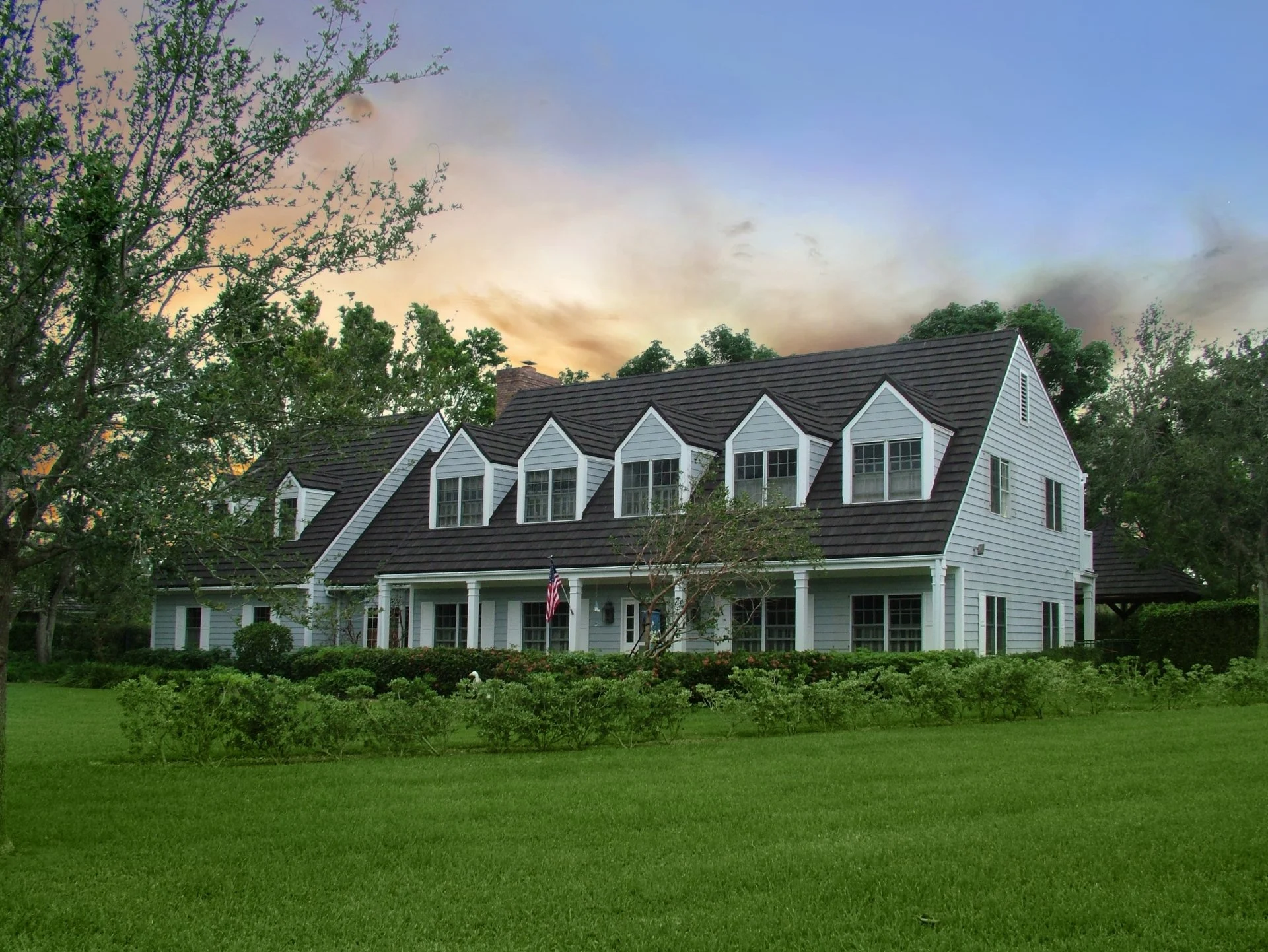
Why ROOFGLORY Is a Suitable Partner for International Villa Projects
ROOFGLORY is a stone-coated roofing manufacturer located in Linyi, Shandong, China.
We work primarily with B2B customers, including:
- Importers
- Roofing distributors
- Contractors
- Developers
- Construction companies
For villa projects, our focus is on supplying roofing solutions that combine architectural appearance with practical performance.
Our product range includes different stone-coated roofing styles suitable for projects where traditional tile or shake aesthetics are required.
For international buyers, we can discuss:
- Product specifications
- Color selection
- Project requirements
- Packaging
- OEM cooperation
- Bulk orders
You can contact ROOFGLORY through our official website:
For customers specifically interested in metal shake-style roofing, see:
How to Select Villa Roofing Materials Step by Step
A practical selection process can be much more effective than comparing dozens of product catalogs.
Start With the Architecture
Determine the visual style of the villa first.
Is it:
- Mediterranean?
- Modern?
- Traditional?
- Mountain-inspired?
- Resort-style?
This immediately narrows the roofing options.
Consider the Climate
Identify the major environmental risks.
Look at:
- Rain
- Wind
- UV exposure
- Humidity
- Salt exposure
- Snow where applicable
Compare Lifecycle Cost
Do not stop at the purchase price.
Calculate:
material + installation + maintenance + expected replacement
Evaluate Roof Weight
Compare the weight of different roofing systems and understand the structural implications.
Review Installation Requirements
A product that looks good but requires difficult installation may not be ideal for a large development.
Evaluate the Manufacturer
Finally, assess the supplier’s:
- Manufacturing capability
- Quality control
- Export experience
- Customization capability
- Communication
- After-sales support
This process helps reduce procurement risk.
Villa Roofing Is a Long-Term Investment
The roof of a luxury villa may represent only one component of the construction budget, but it has an outsized influence on the finished property.
It is highly visible.
It protects the building.
It affects maintenance.
And replacing it later can be expensive and disruptive.
For these reasons, roofing should be treated as a long-term investment rather than simply another construction material.
The best roofing solution is the one that makes sense for the building’s architecture, climate, budget, and expected service life.
For many modern villa projects, stone-coated steel roofing provides an attractive middle ground between traditional roofing aesthetics and modern metal roofing performance.
It can reproduce the appearance of traditional tiles or shakes while offering a lightweight and durable alternative.
The key, however, is not simply selecting “stone-coated steel.”
The product specification, manufacturer, installation, and project environment all matter.
Final Thoughts: What Is the Best Roofing Material for a Villa?
There is no single answer to the question.
Clay tiles can be excellent for traditional Mediterranean architecture.
Concrete tiles can provide a practical solution for many residential projects.
Asphalt shingles can be attractive when initial cost is the dominant consideration.
Natural cedar shakes offer authentic character.
Metal roofing can provide modern performance and design flexibility.
And stone-coated steel roofing can bridge the gap between traditional appearance and modern construction requirements.
For builders, developers, and importers, the most important thing is to evaluate the roofing material as part of the entire project lifecycle.
Look at appearance, climate suitability, weight, installation, maintenance, durability, logistics, and supplier capability together.
That approach produces a much better result than choosing a roofing material based on price or appearance alone.
If you are sourcing villa roofing materials from China for a residential development, resort, or distribution business, ROOFGLORY can provide product information and project-oriented recommendations based on your target market.